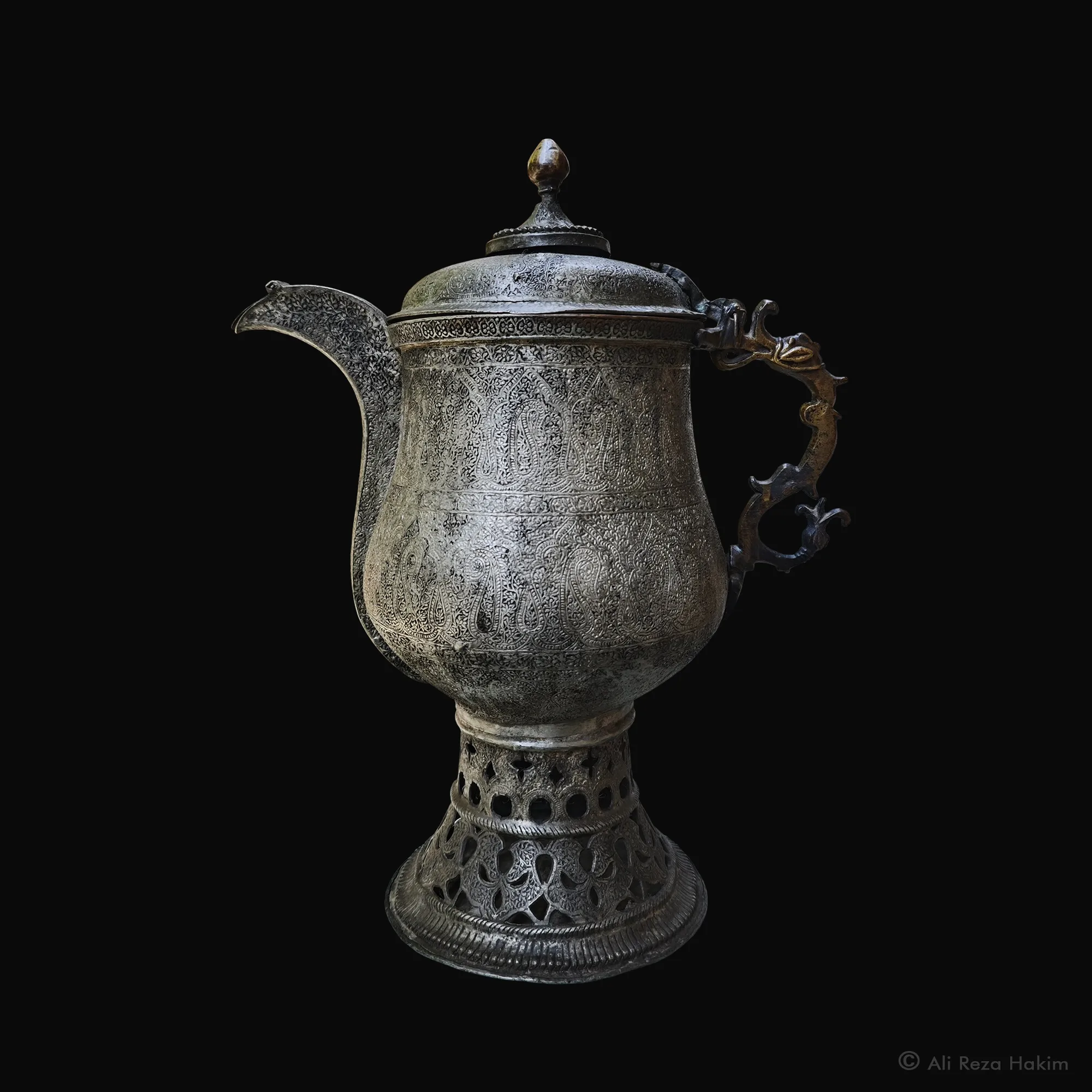
Ewer
(Naer) نٮ۪ر
Mid-19th century
Origin: Kashmir
Material: Copper with tin plating and black enamel
Design: Shawl-tarah
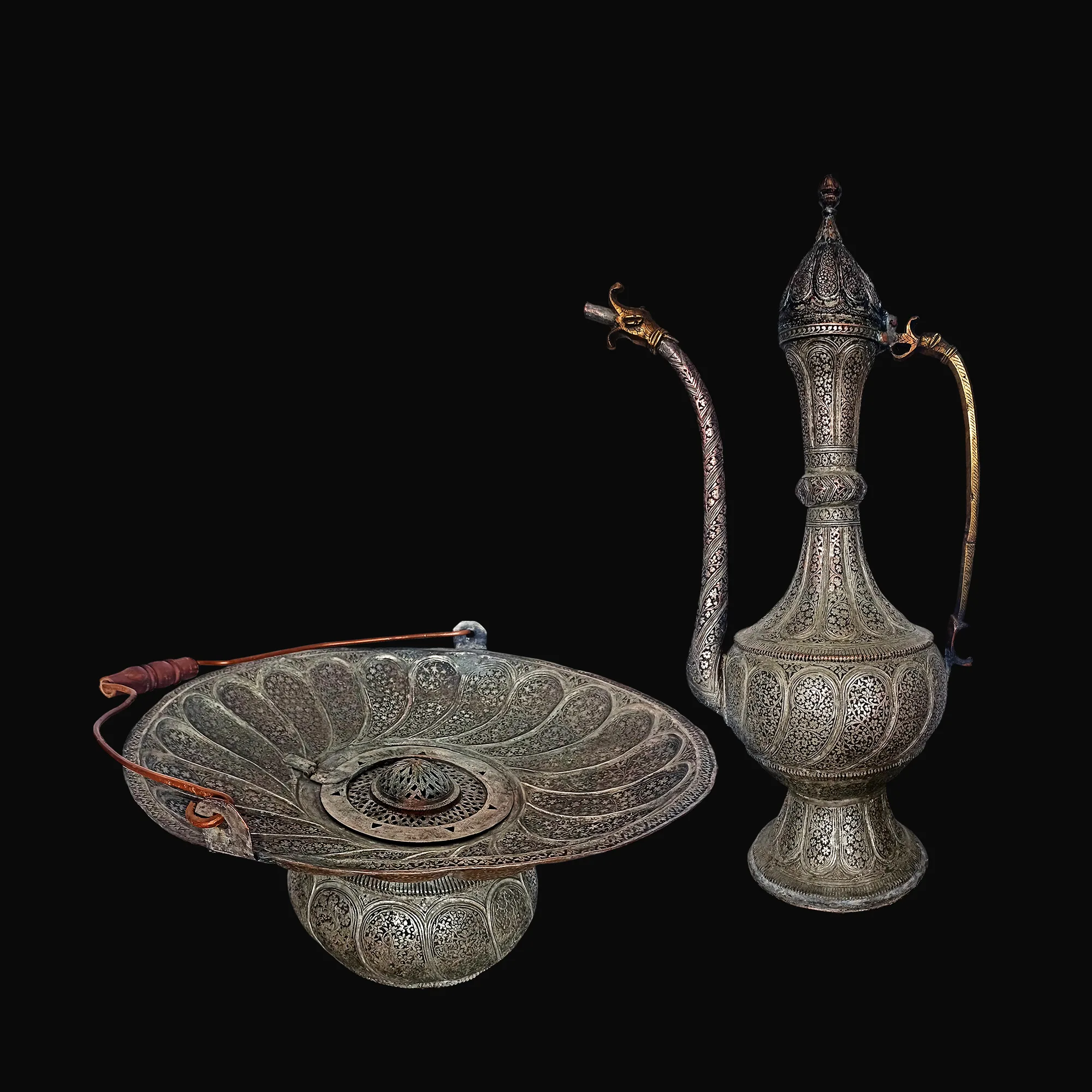
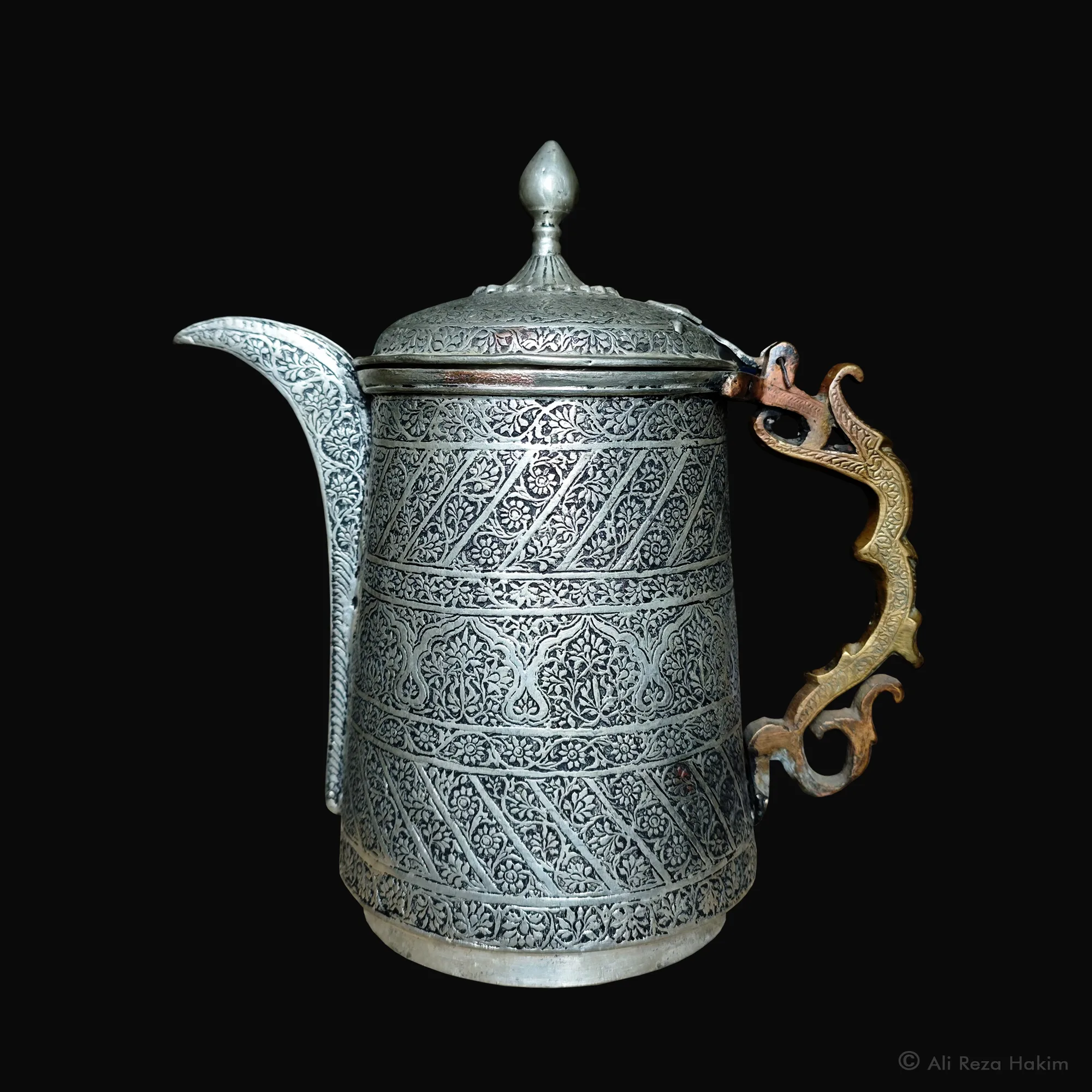
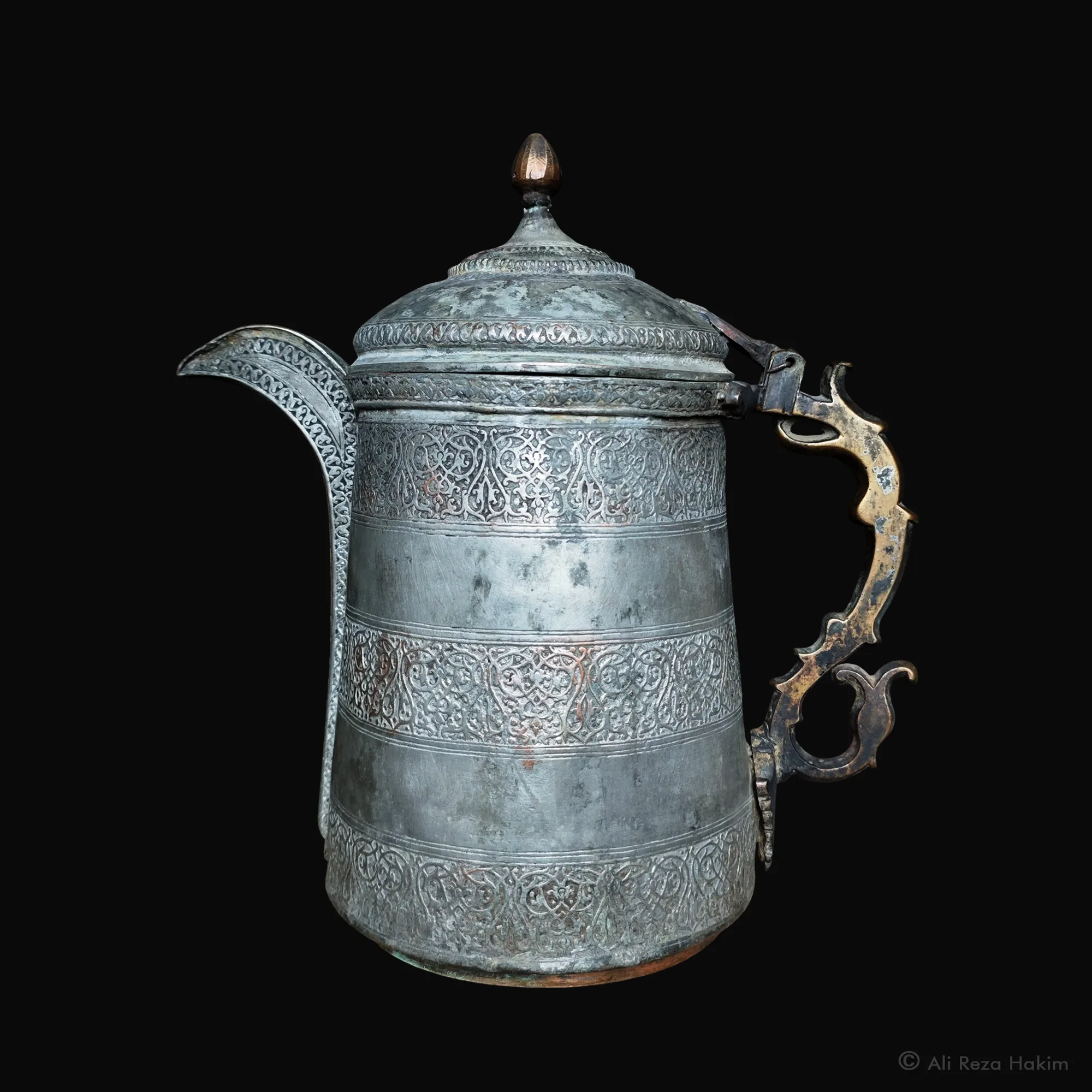
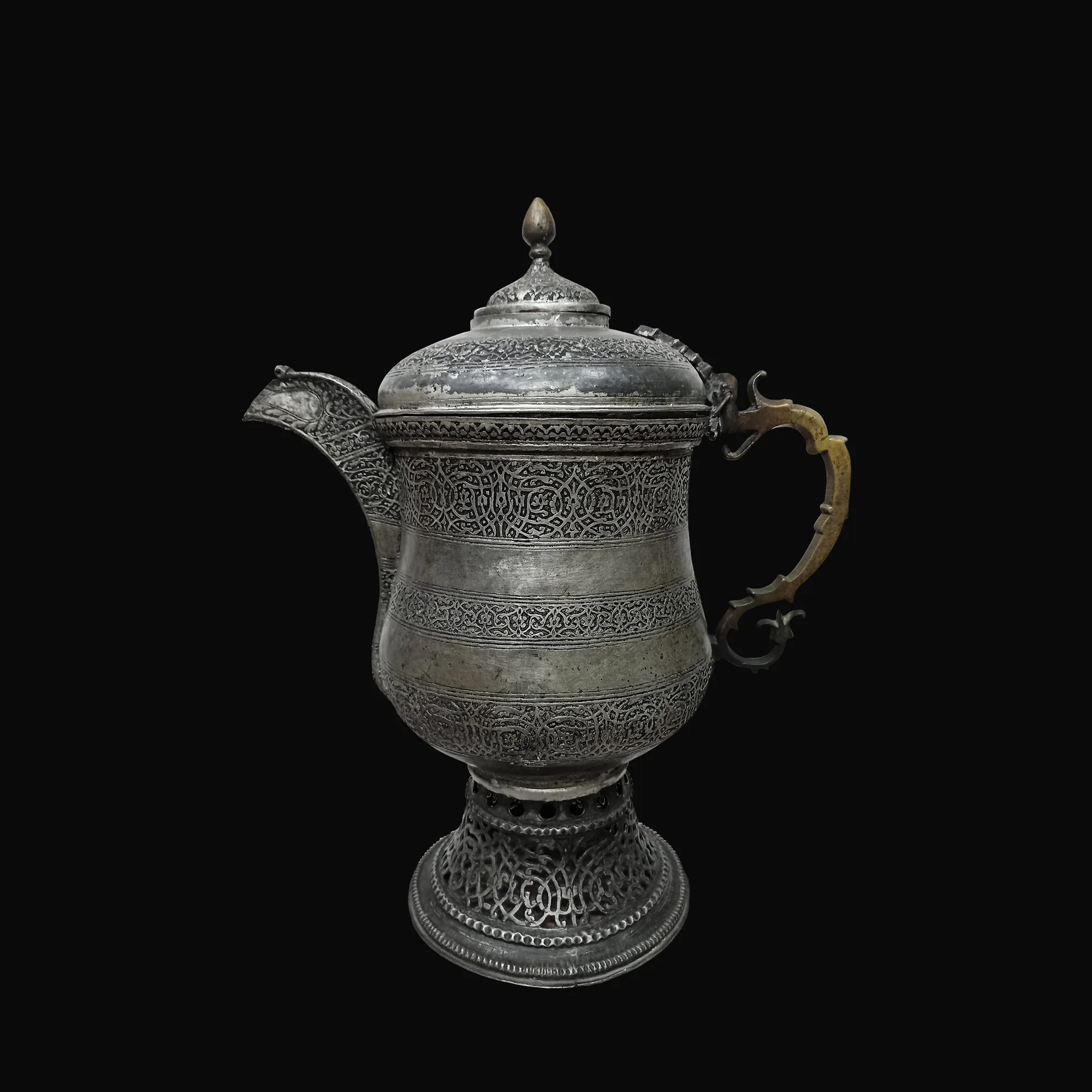
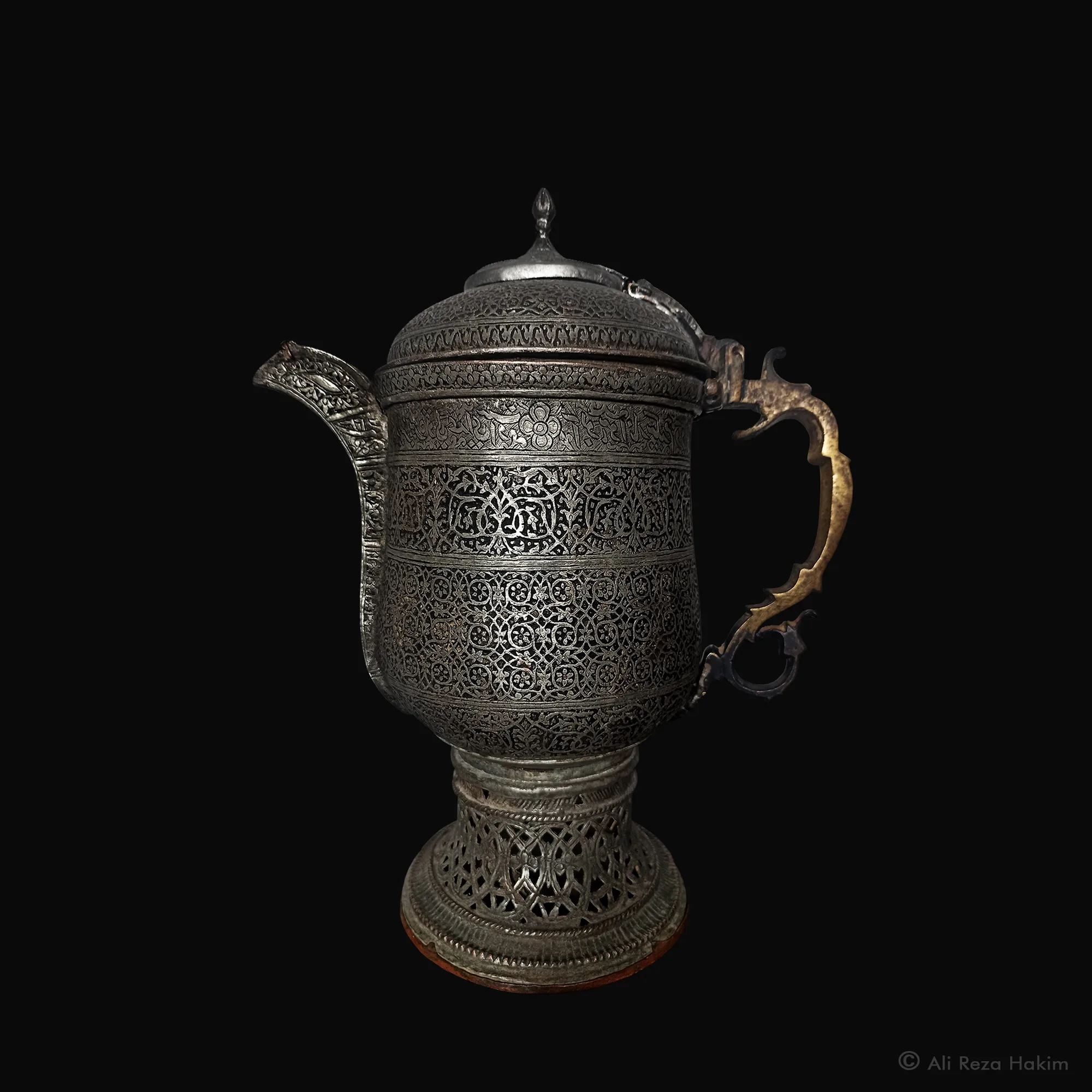
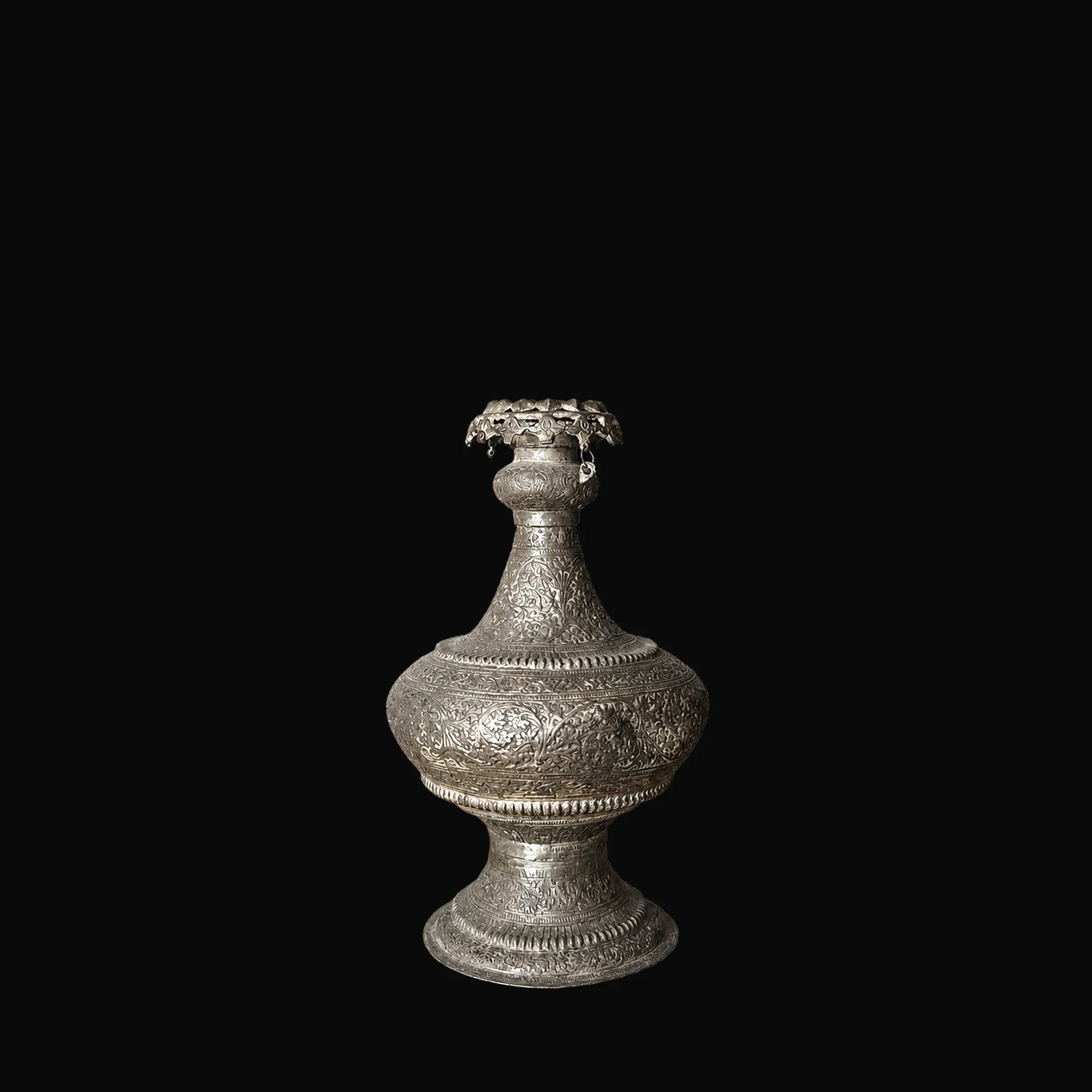
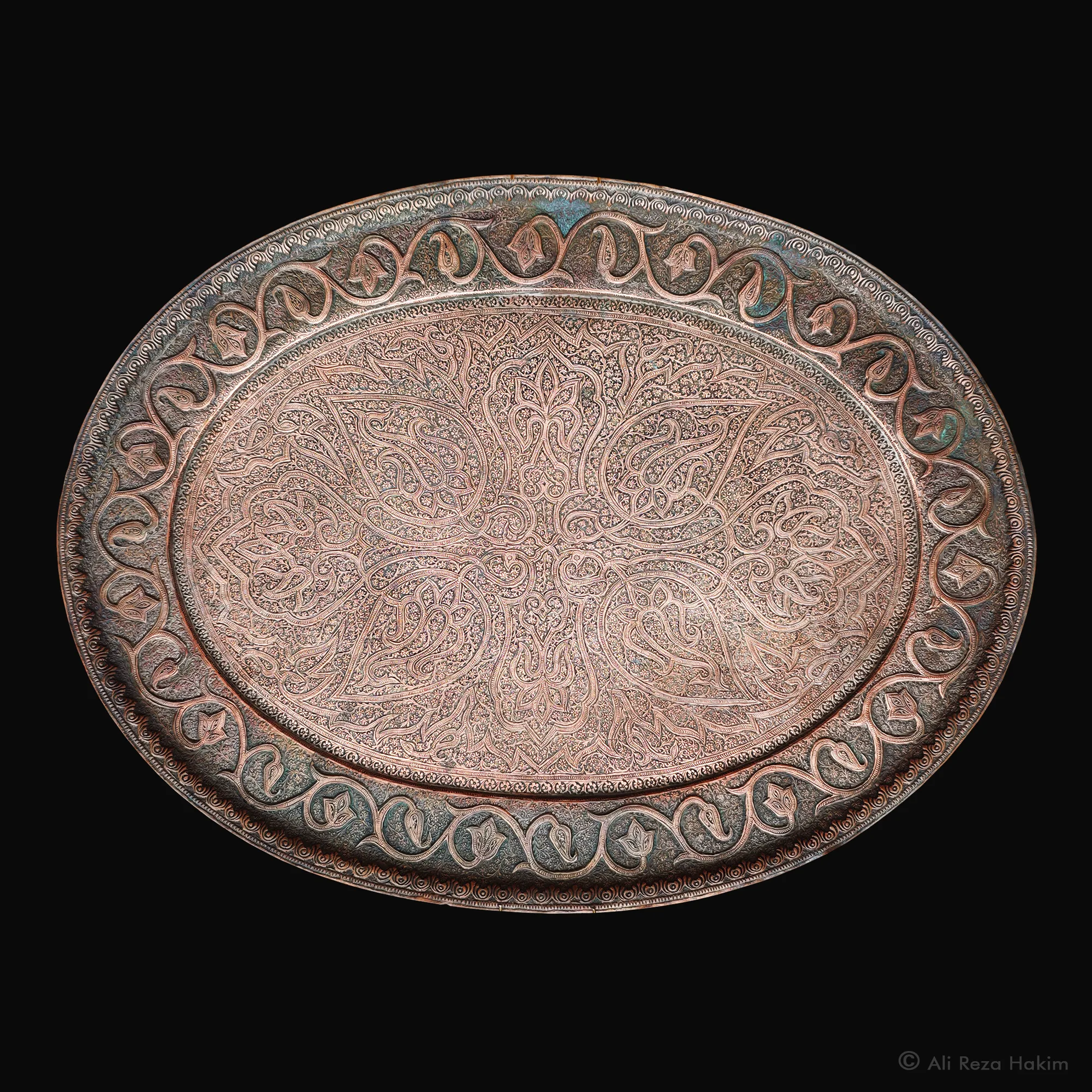
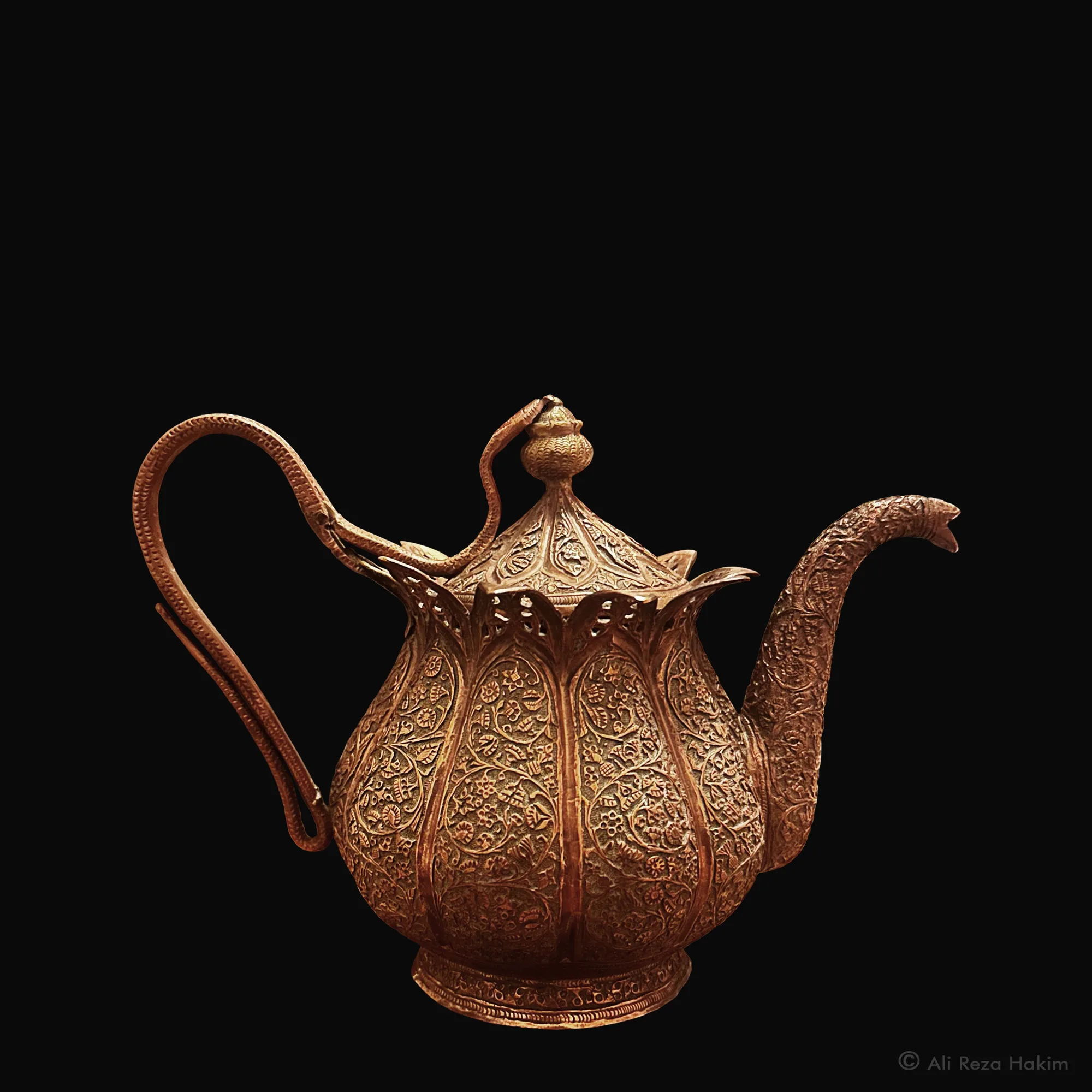
This imposing Kashmiri copper Naer is the ewer component of the traditional Tash–Naer hand-washing set. It was used to pour water over the hands, while the accompanying Tash, a broad basin, collected the water. Such sets were traditionally used during ceremonial gatherings, forming an important part of Kashmiri traditions of hospitality. The missing basin makes this surviving ewer particularly interesting as an individual object.
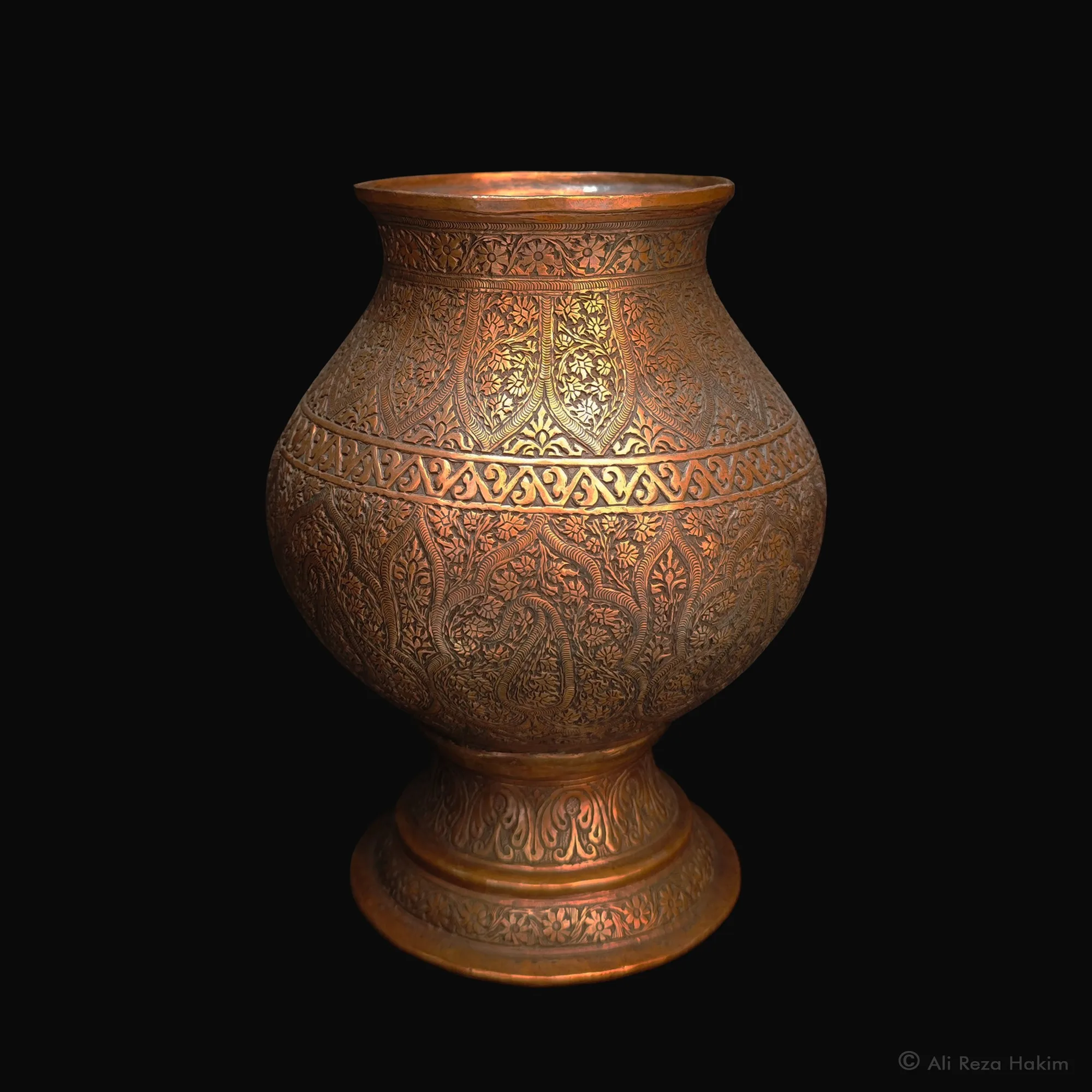
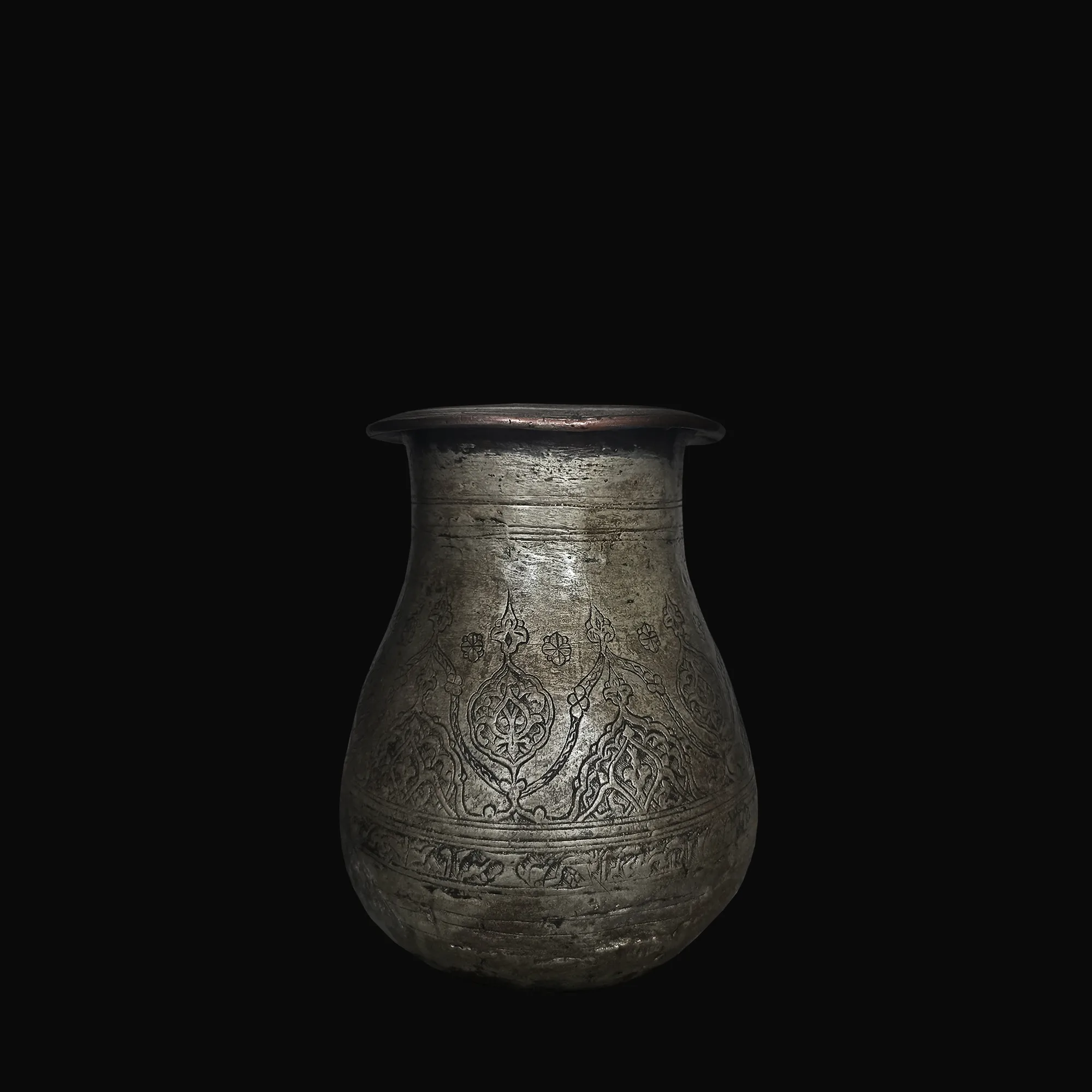
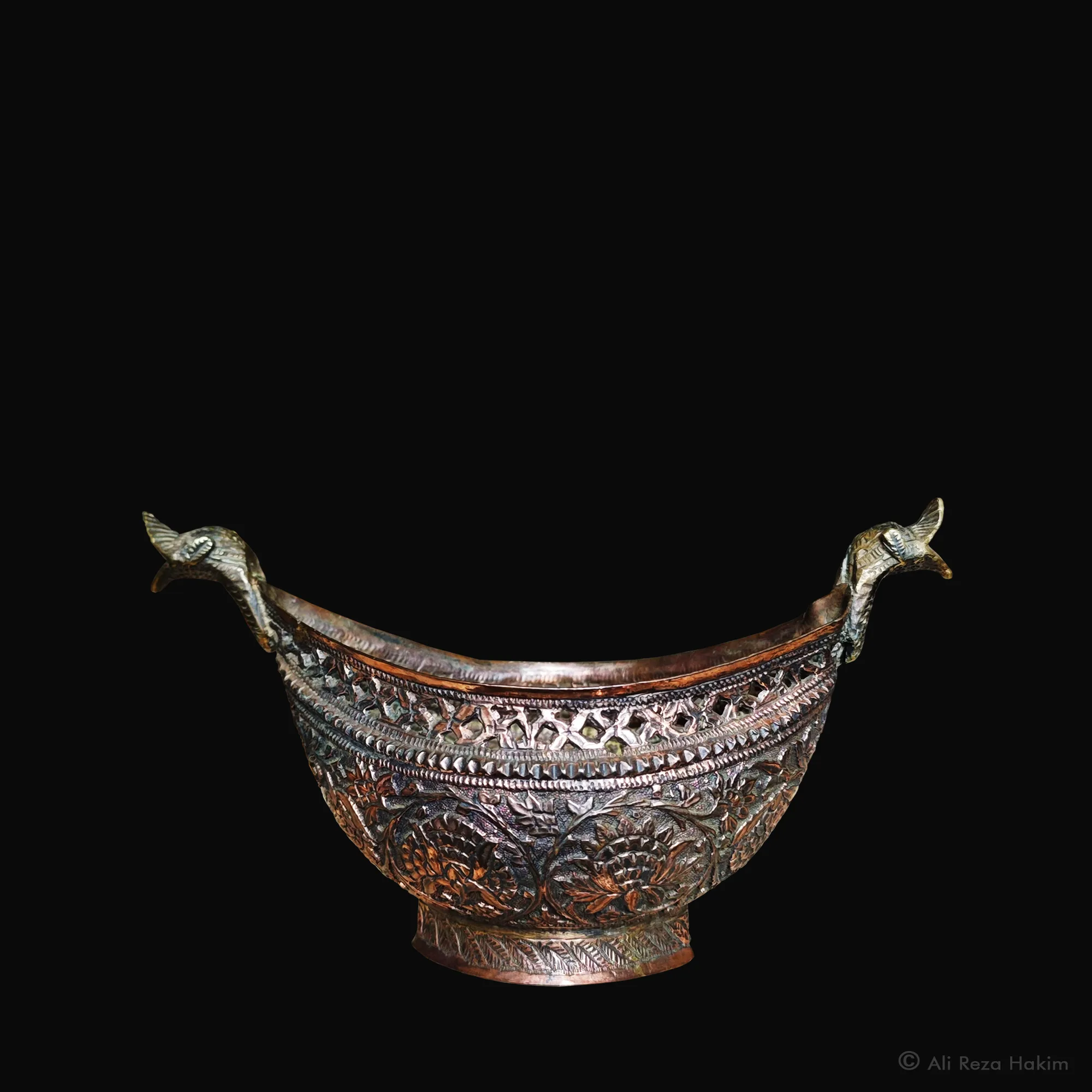
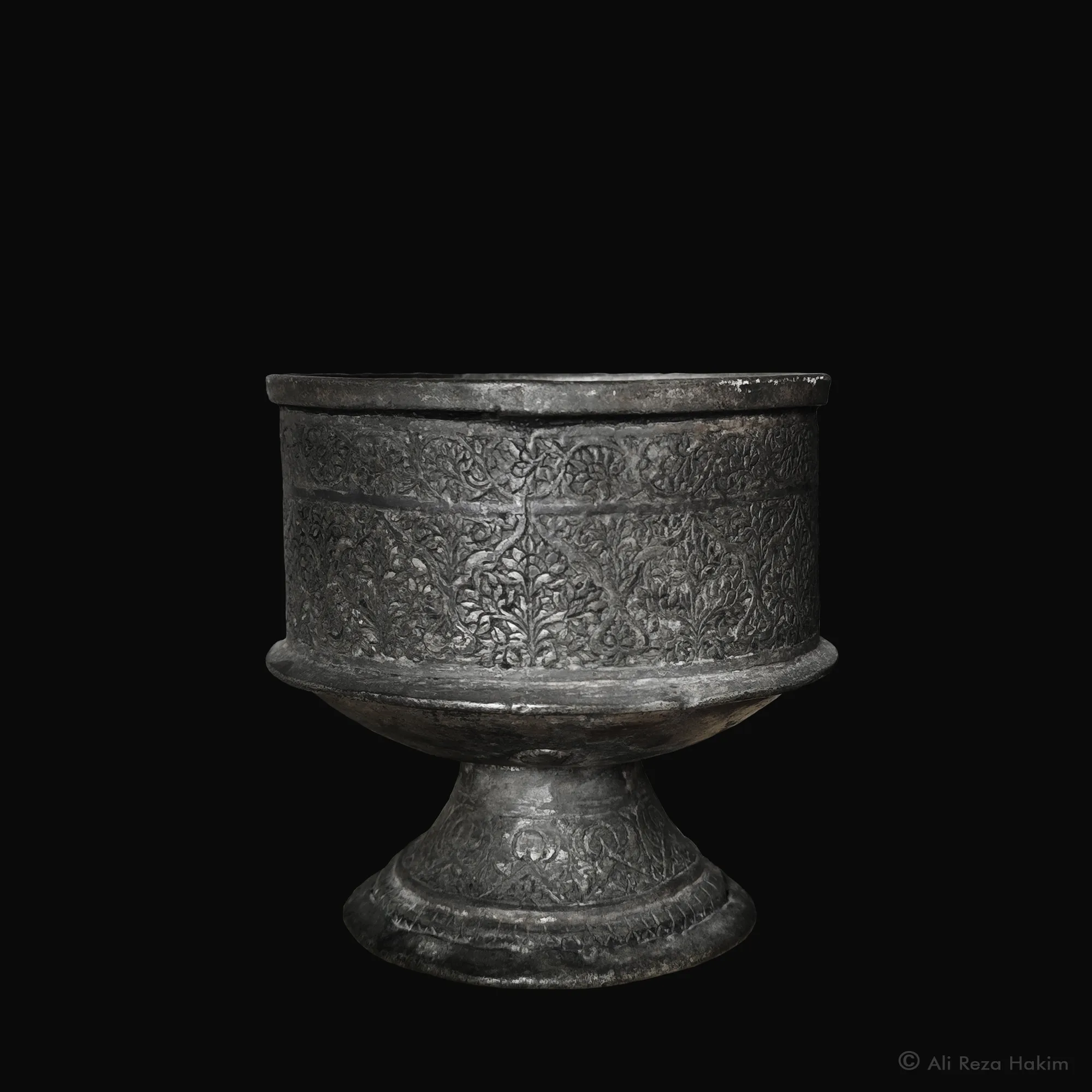
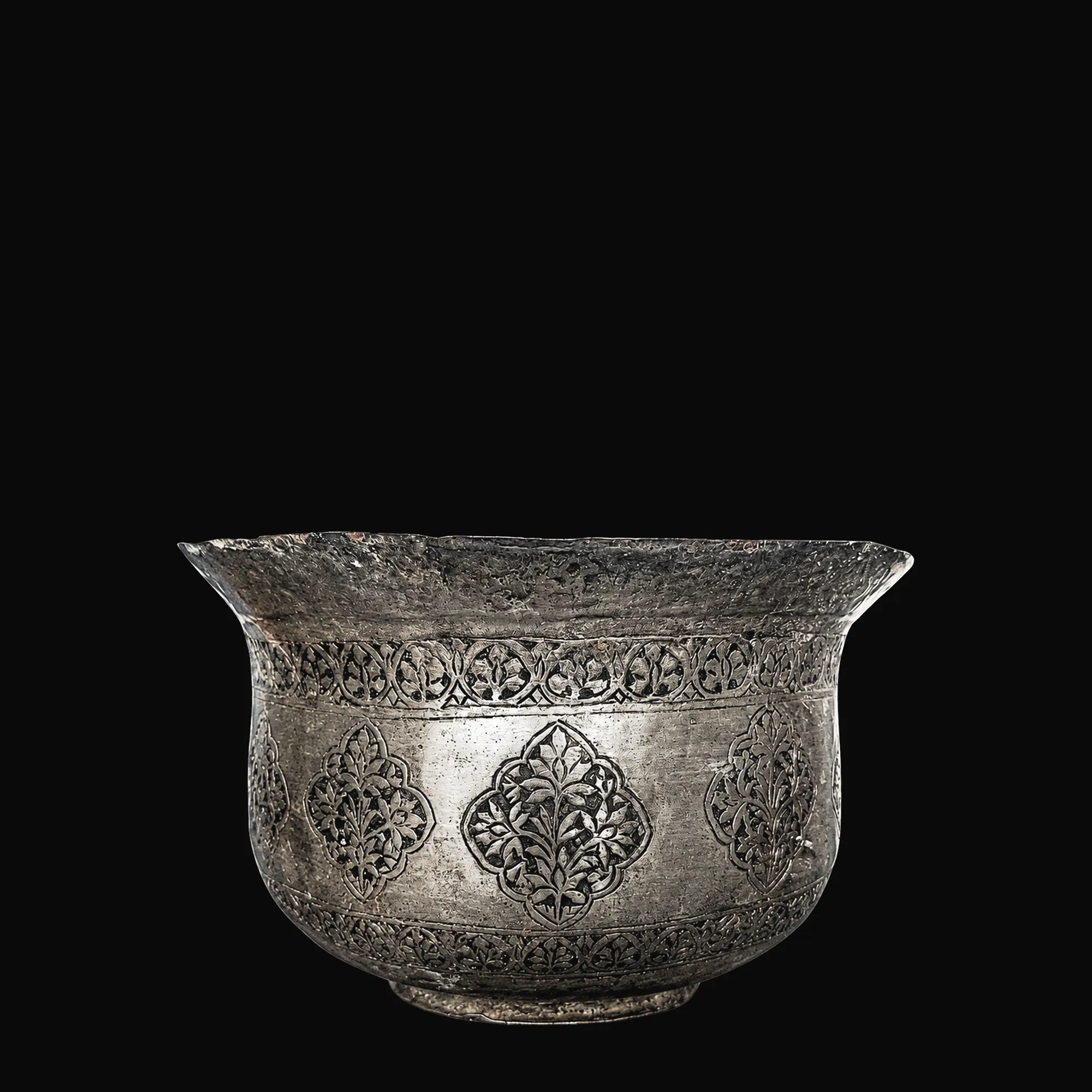
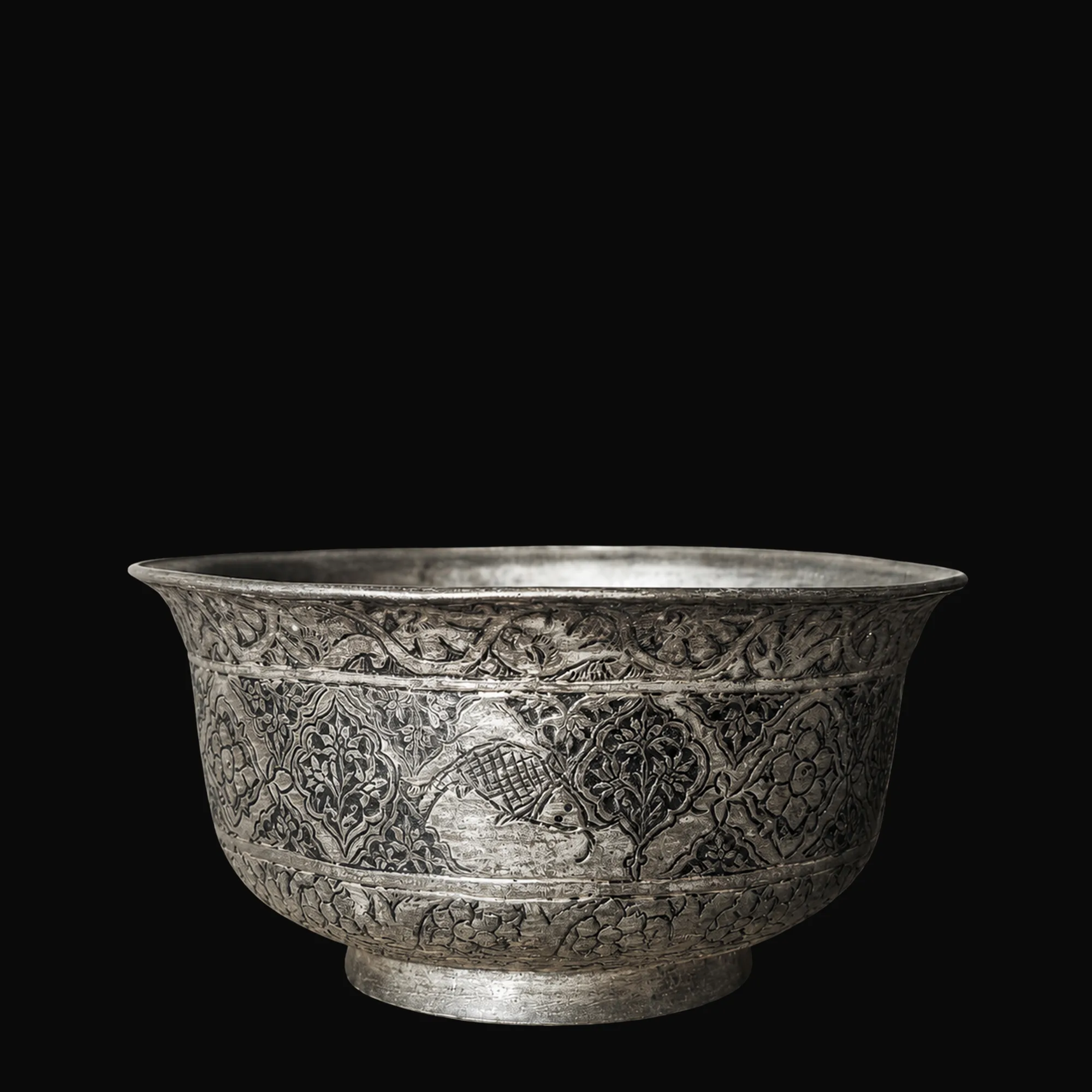
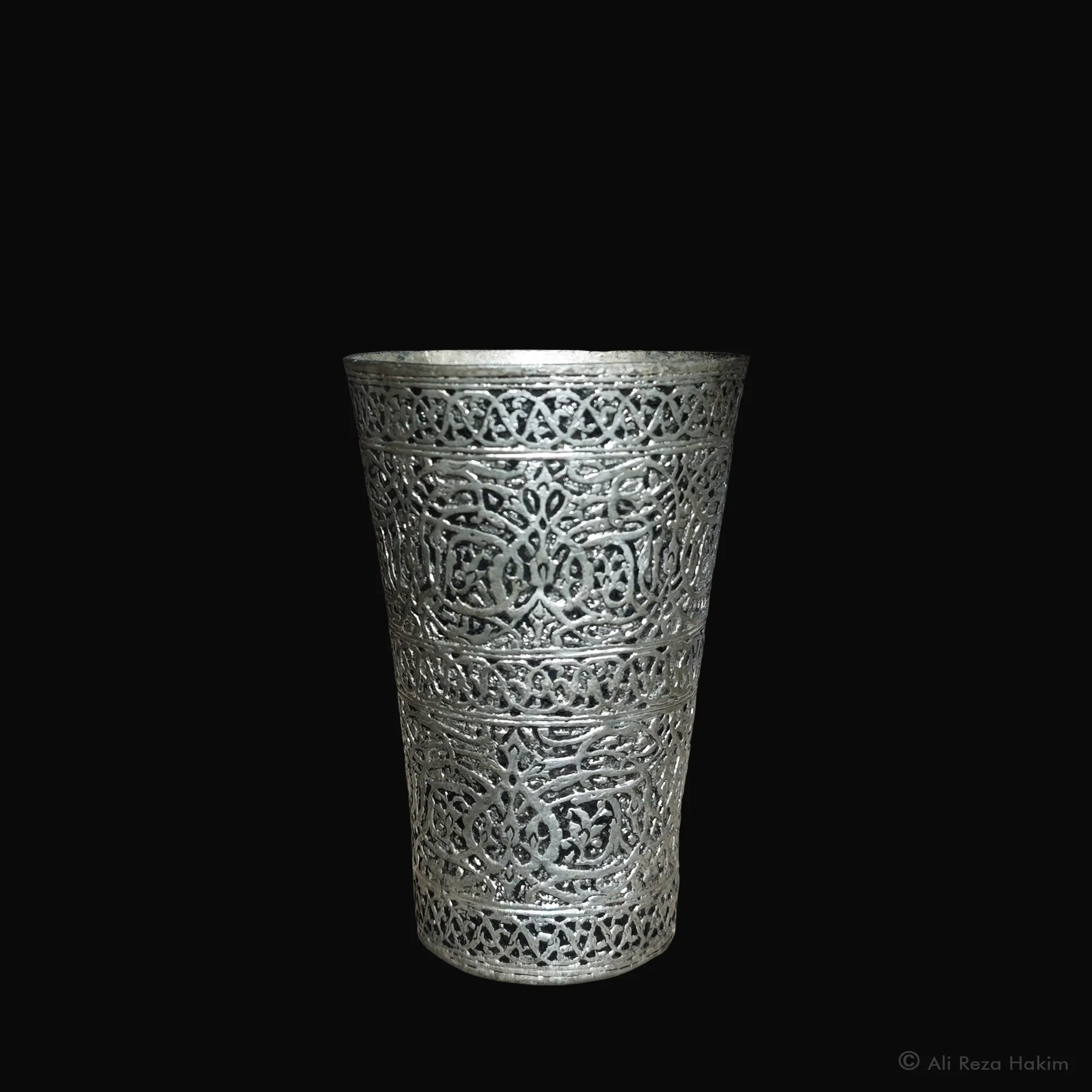
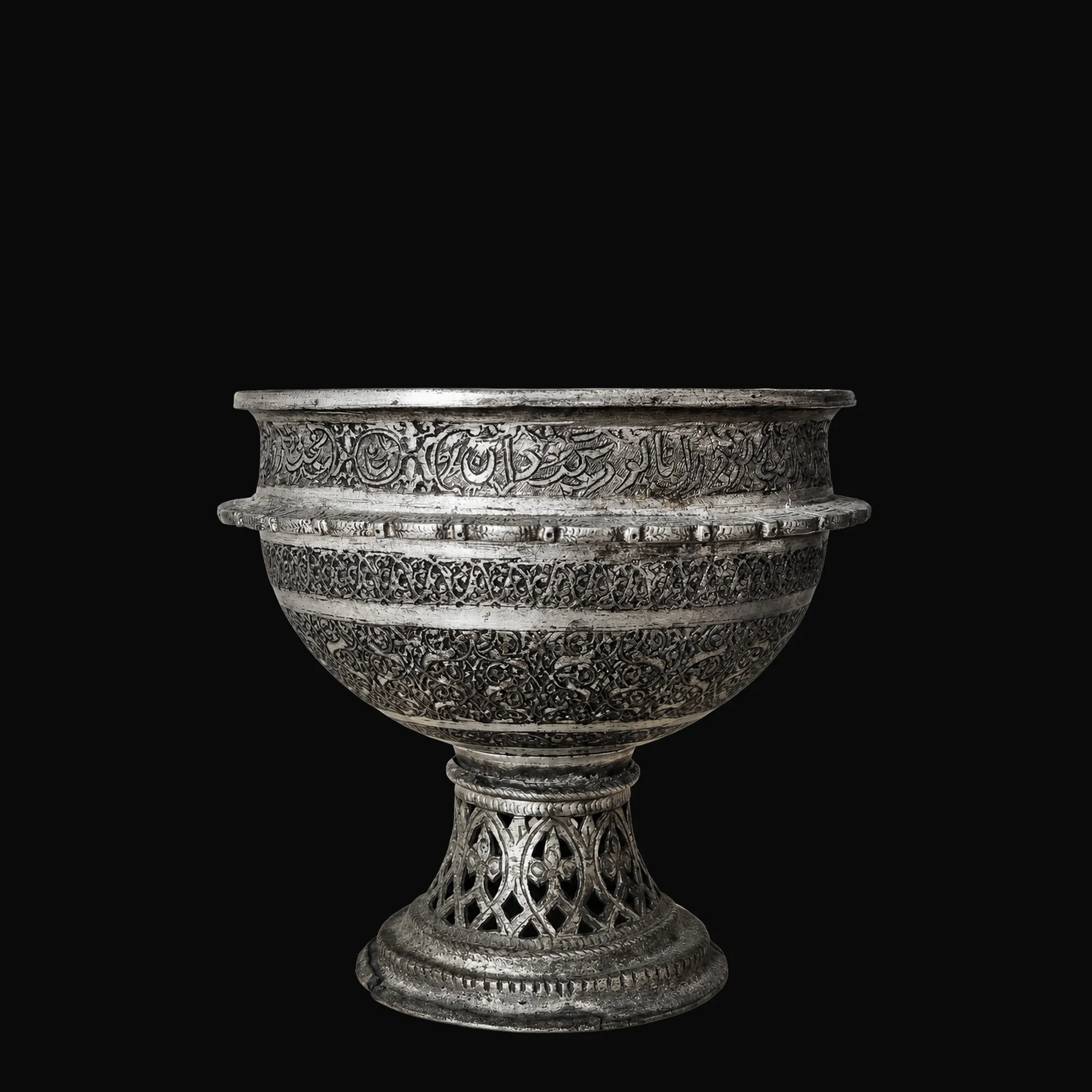
What distinguishes this example is the extraordinarily dense engraving, which covers every available surface of the vessel. The decoration is carefully arranged in horizontal registers, combining scrolling foliage, flowering vines and finely worked vegetal patterns with paisley or boteh forms enclosed within cusped arch-shaped frames. Two prominent calligraphic bands further punctuates the composition, creating a rhythm between the ornamental and epigraphic registers. The overall treatment strongly recalls the dense decorative vocabulary of Kashmiri shawls, where paisleys, cusped forms, foliage and floral motifs are similarly arranged in tightly composed fields. In this sense, the vessel can be understood as a remarkable translation of the shawl-like (tarah) aesthetic into metal, transferring the visual language of Kashmiri textile ornament onto the engraved surface of copper.
The survival of the ewer without its basin is a reminder that these objects originally belonged to larger domestic sets, many of which have since been dispersed, lost or destroyed. The presence of a second, complete tash naer set in the collection provides an intriguing point of comparison. The two ewers share a remarkably similar form, proportions, construction and ornamental vocabulary, suggesting that they may have emerged from the same workshop or from closely related craftsmen. The principal difference is the presence of only one calligraphic band on one example, which may reflect a variation in decoration rather than a difference in workshop tradition. Their close correspondence gives an idea of how the missing basing could have been, and raises the possibility that such vessels were produced as part of a particular workshop pattern, or perhaps even commissioned for the same household or patron. While this cannot be established with certainty without documentary evidence, the visual similarities offer valuable evidence for understanding the continuity and organisation of Kashmiri metalworking traditions.
Private collection: Traam and Beyond