From Trām to Beyond
February 2004
Jawaharnagar, Srinagar
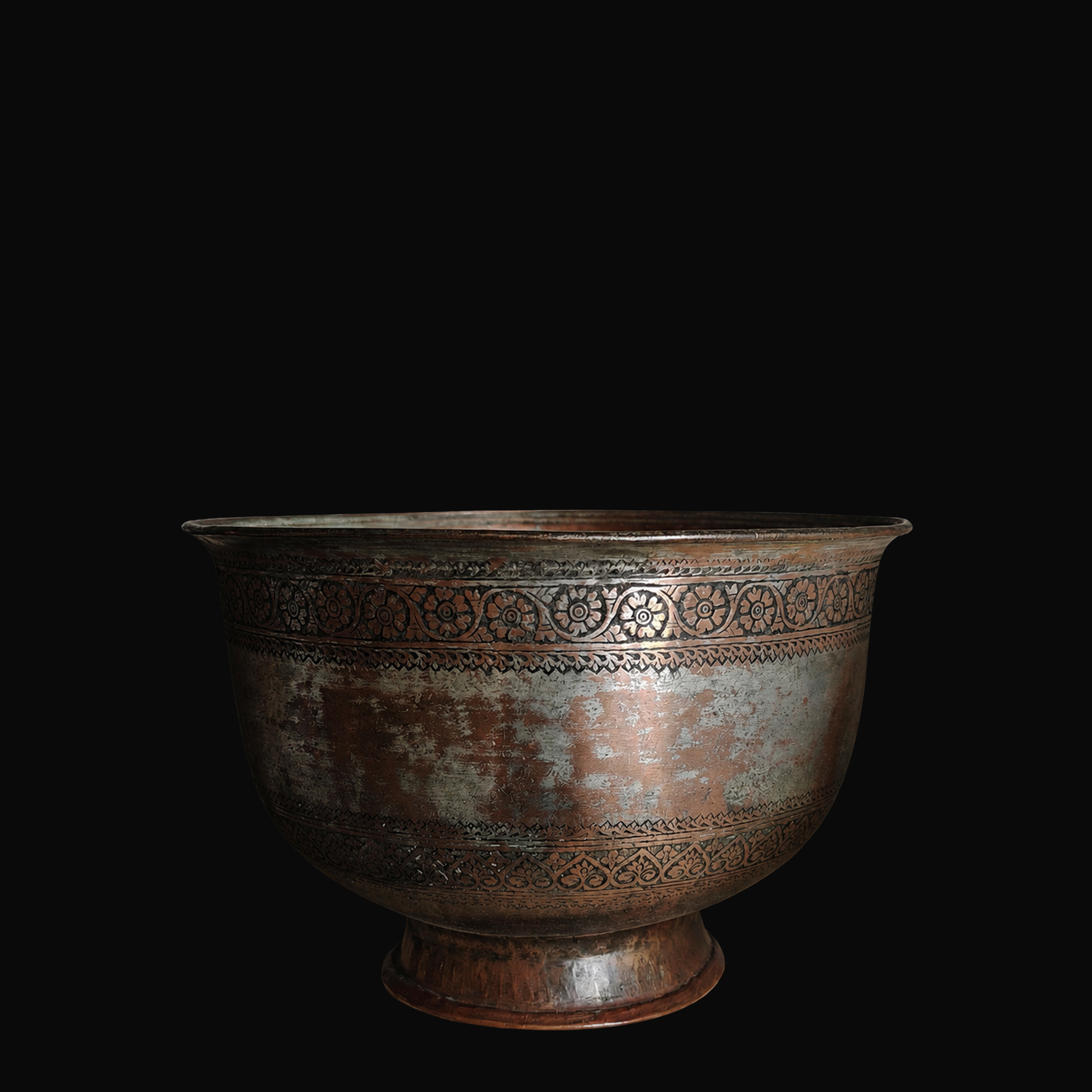
It was an evening like any other. During a casual stroll in my neighbourhood with mummy, we passed by this shop selling Kashmiri copperware, locally called “Traam”. My eyes fell upon an antique bowl with hand engraved and enamelled floral rim, it's patina worn off, just sitting there on a shelf among its fresh counterparts. Someone had once taken the time to craft it, while someone else, after years of use, had sold it by weight, in exchange for something new, a practice not uncommon even today.
I couldn't look away. Mummy noticed, and got me that for 300 Indian rupees. She had no way of knowing, and nor did I, that she had brought me not just a bowl, but inspired the beginning of something beautiful and meaningful. That bowl still sits with me today. The first masterpiece. The one from where it all started.
March 2010
Jawaharnagar, Srinagar
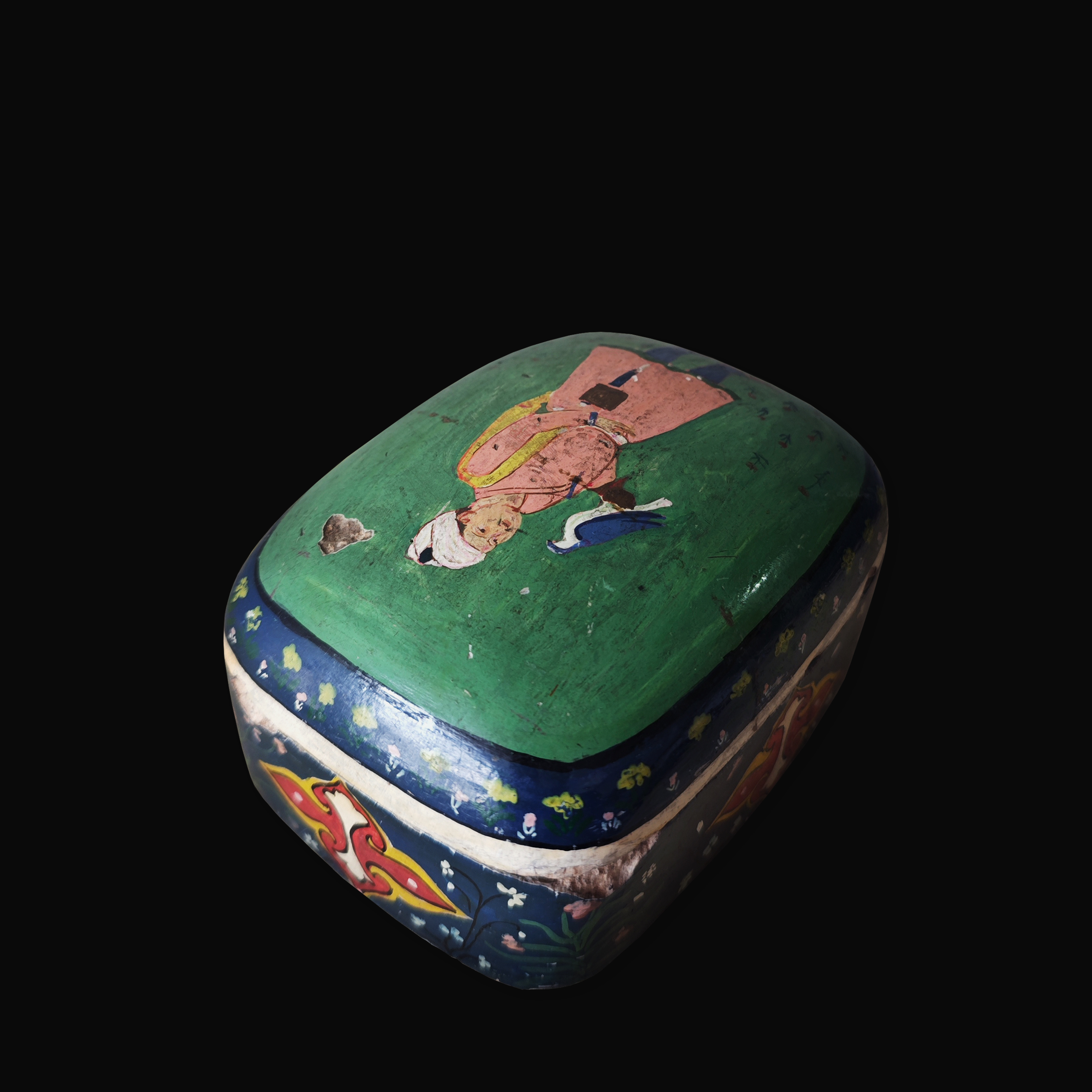
Dadi, my dear grandmother, gave me a small papier-mâché box, delicate and worn, with a beautiful miniature painted on a soft pastel green background. I had seen it all my life, tucked away carefully in her steel chest that she kept under the bed, always wondering about its story. “My grandfather made it. Take care of it, it’s very dear to me”, she said smiling, before putting it in my hands.
July 2017
Munawarabad, Srinagar
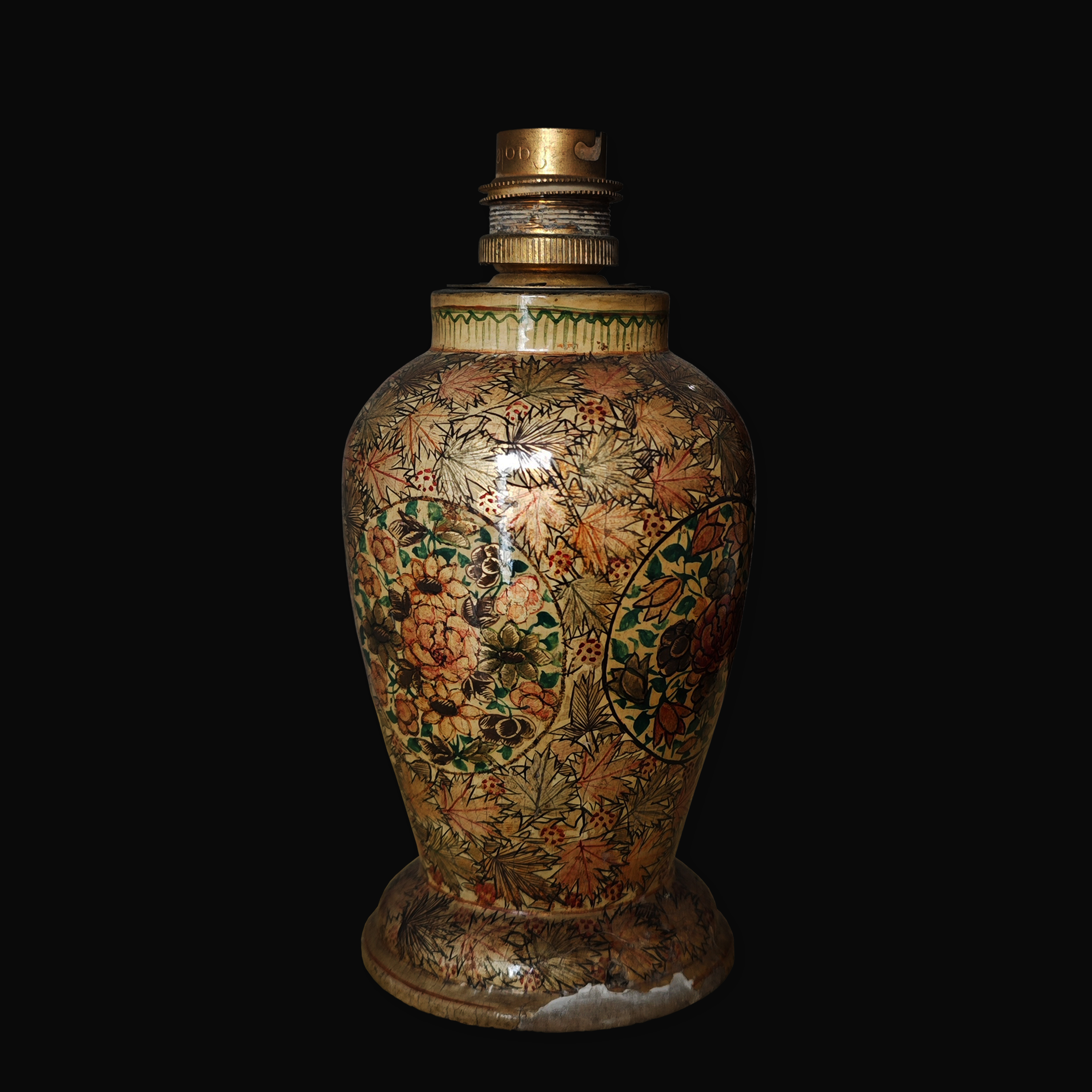
Babi, my dear maternal grandmother, showed me a papier-mâché table lamp from her father. The surface was adorned with chinar leaf motifs, each one traced in real gold that caught the light and shimmered softly. She told me about his handicraft business by the name of “M. Qasim and Sons”. This lamp was the only physical memory she had kept of her father’s handicraft empire. Weeks later, after having some small repairs done, she placed the lamp in my care. There was no ceremony, just a quiet, deliberate gesture of trust. Now it sits with me, its surface glittering, as though the gold holds onto light the way memory holds onto time.
June 2018
Pampore, Pulwama
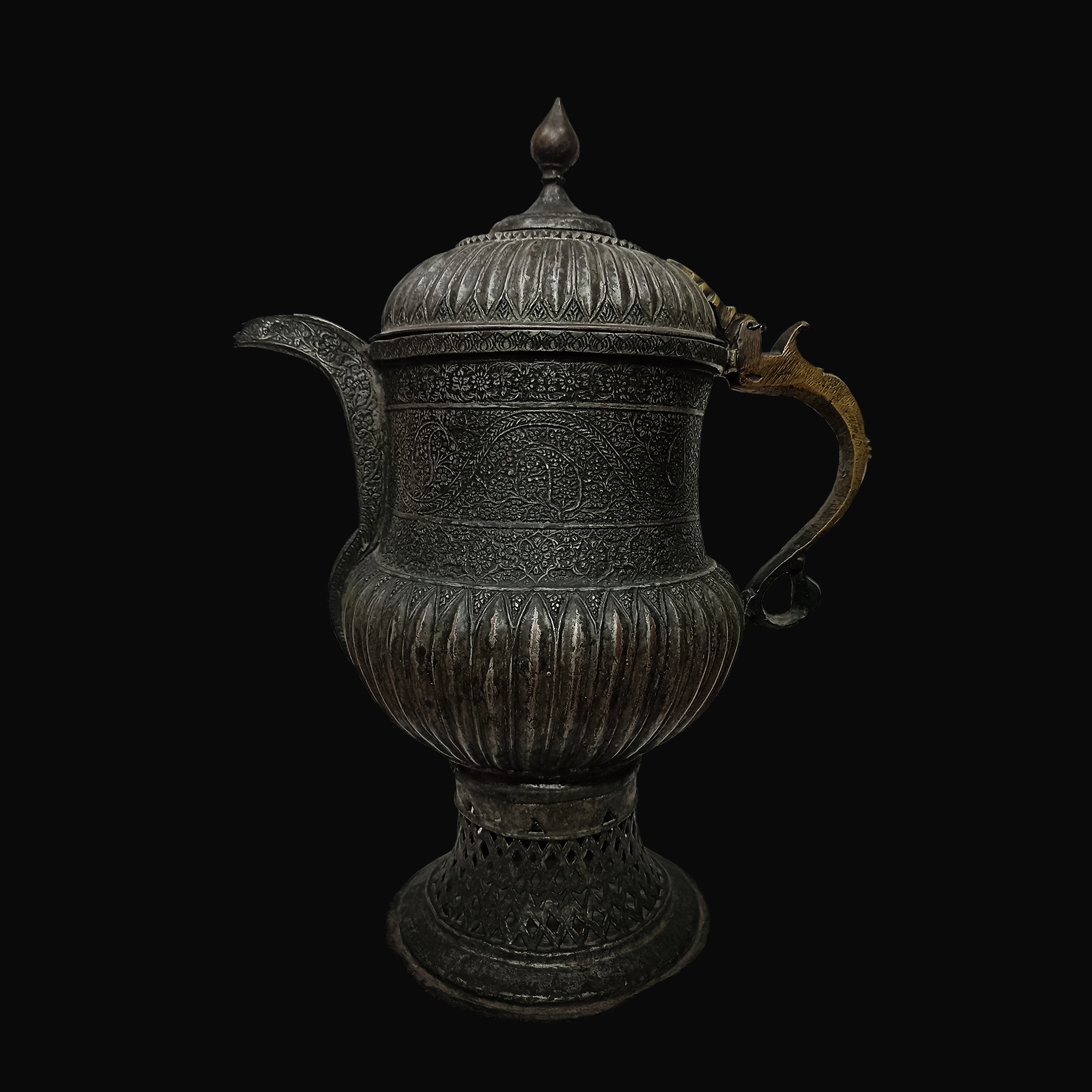
I bought a samovar, and not just any samovar, but the most beautiful one I had ever seen. Light as a feather, the hand carving on it is unbelievably intricate, every detail telling a story of patience and craft. I couldn’t stop running my fingers over the motifs, almost in disbelief that it’s now part of my collection.
What makes it even more special is that I bought it with my first salary. There’s something deeply satisfying about that, like this piece carries not just artistry, but a memory of a beginning.
Present day
Milan, Italy
Looking back, I think the fondness was always there, quietly building, long before that evening stroll in Srinagar. Growing up in a cultural context full of arts and crafts, I was unknowingly getting sensitized to the colours, the motifs and the patience embedded in every hand-made Kashmiri craft. Learning about them was my solace and collecting them became my way of holding on to my cultural heritage.
It followed me through architecture school, where I found myself endlessly drawn to the way Kashmiri vernacular buildings and local handicrafts were never really separate things, but the same story, told in different forms. That understanding has quietly shaped much of my local work aimed at incorporating tractional handicrafts into contemporary architectural practices as a means to their revival.
But I won't pretend it hasn't been painful to grasp that so many crafts are already gone. The ones that remain are often shadows of what they once were. That is what really motivates me to document these masterpieces across different mediums, with an idea of creating a repository, not just of the objects, but their stories, as evidence of a legacy worth remembering, for the new generation to see, and hopefully be inspired from, just as I was!
Many of the pieces in this collection have made their way back to Kashmir from Europe and America, returned home, where they belong!
This space exists in the hope that someone, somewhere, stops the way I did, in front of something they cannot look away from, and gather the courage to pursue.
Craft Heritage of Kashmir
Kashmir's arts and crafts emerge from a long continuum of making, shaped by memory, geography, patronage, and sustained cultural exchange. In this Himalayan valley, defined by its stunning landscape and shifting histories, craft emerged as a language through which communities interpreted the world around them. Materials were not merely used but understood. Across centuries, artisans have negotiated change with quiet ingenuity, absorbing influences without losing a sense of place. What distinguishes Kashmiri craftsmanship is not only technical refinement, but an enduring attentiveness to detail, proportion, and meaning. Objects were rarely isolated from life. They participated in ritual, domestic life, and exchange, carrying within them layers of intention and inheritance.
This history is therefore not linear, but cumulative, comprised of a palimpsest of adaptations that reveal how skill, belief, and environment converge. To trace Kashmiri arts and crafts is to encounter a tradition that is at once rooted and fluid, shaped as much by continuity as by transformation, and sustained by the persistent dialogue between hand, material, and imagination.
1. Prehistory: Origins of Material Culture
Early Settlements and the Birth of Craft (c. 3000–1500 BCE)
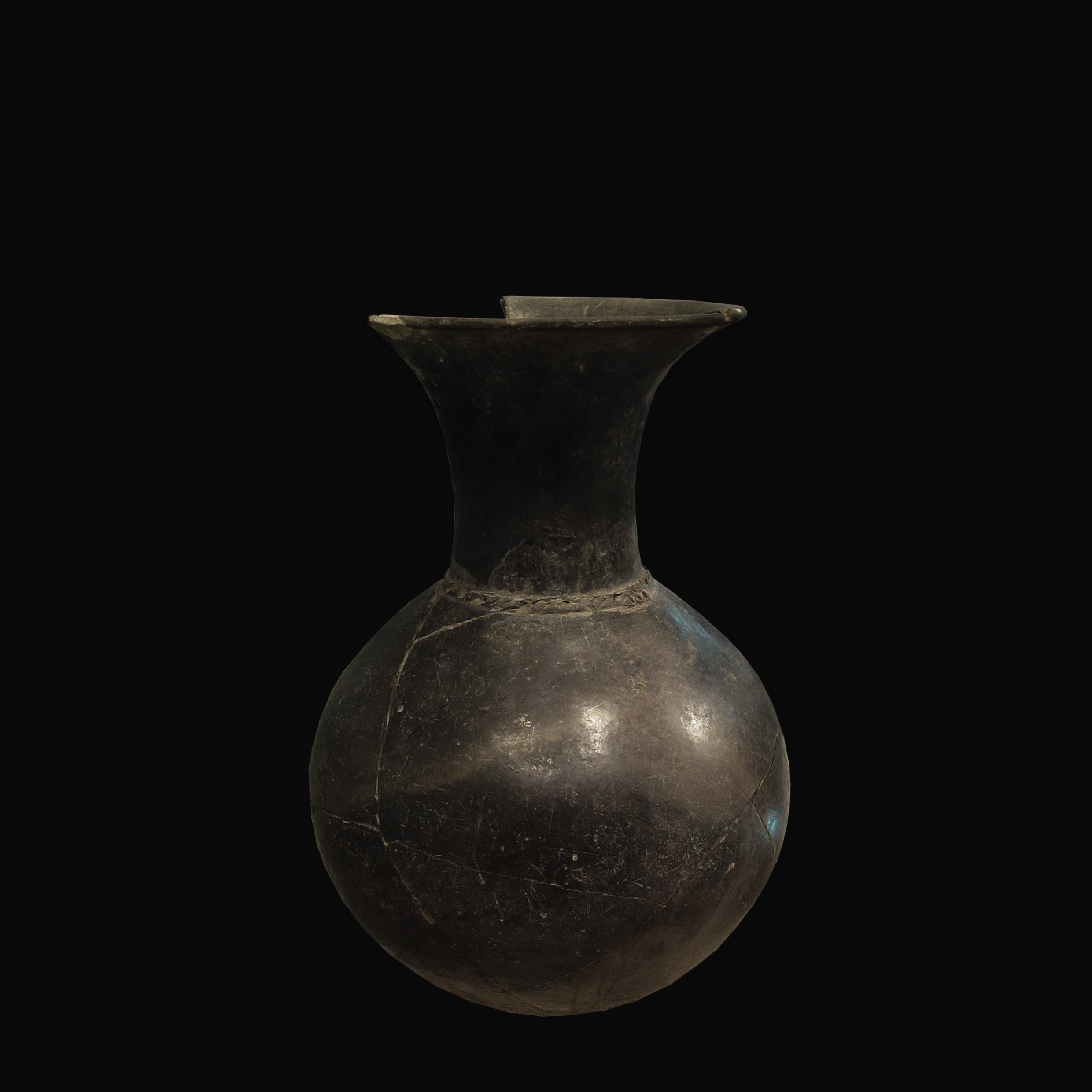
The foundations of Kashmiri craft traditions lie in prehistoric settlements such as Burzahom, where early communities produced handmade pottery, tools, and rudimentary terracotta objects. These artifacts demonstrate an early sensitivity to material and function, establishing a lasting ethos of resourcefulness, adaptability, and a respect for natural materials, that continues to define Kashmiri craftsmanship [1][2].
Pottery from Burzahom, Kashmir. Neolithic period, 2700 BC. National Museum, New Delhi. Reproduced from Kaw, M. K. Kashmir and Its People: Studies in the Evolution of Kashmiri Society. New Delhi: APH Publishing, 2004.
2. Early Antiquity: Indigenous Beliefs and External Contacts
Naga Traditions, Indo-Greek and Indo Scythian Influences (c. 2nd century BCE onwards)
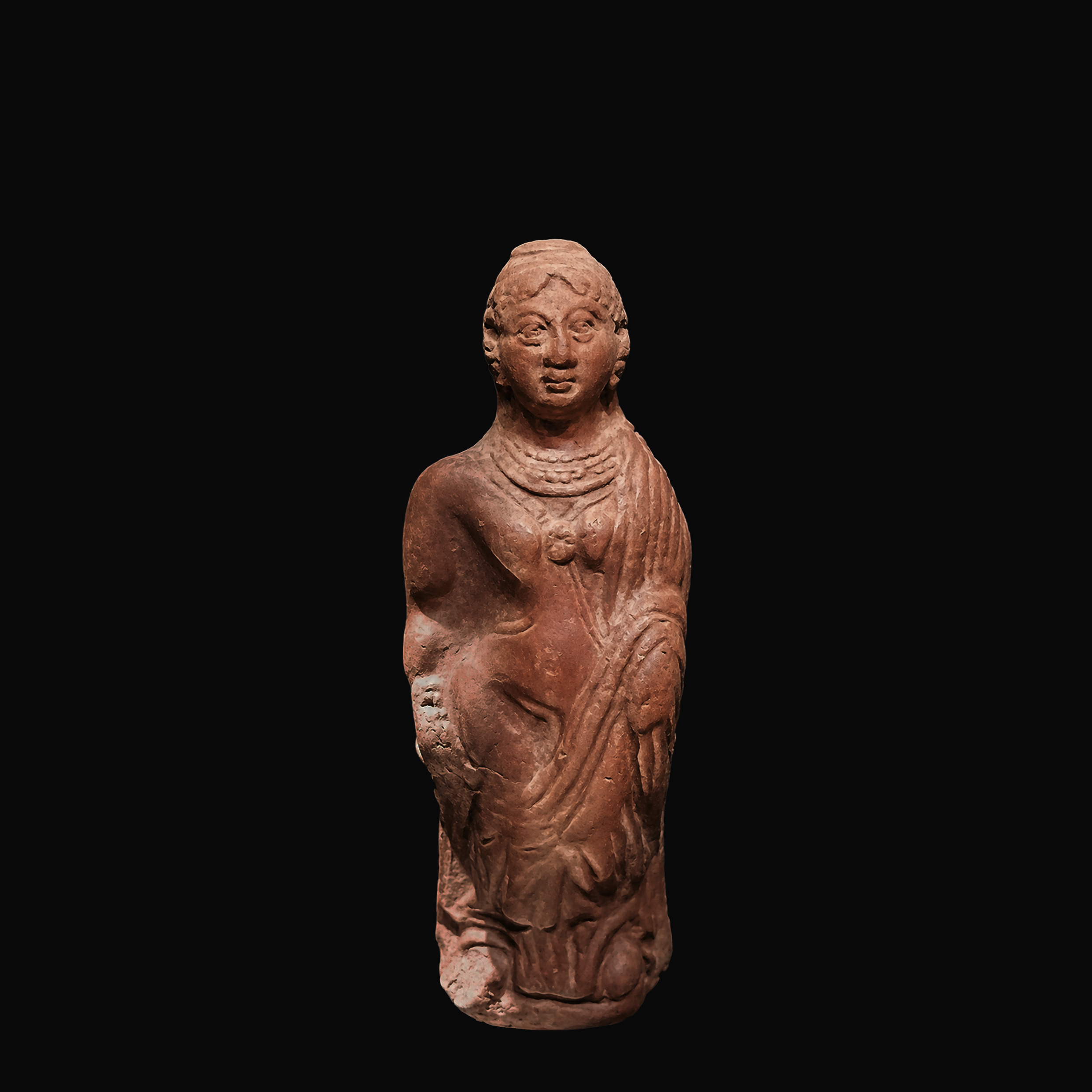
As settled life developed, Kashmir's cultural landscape was shaped by indigenous belief systems, particularly Naga traditions associated with water and fertility, which informed symbolic and ritual practices [3]. Simultaneously, Indo-Greek and Gandharan interactions introduced naturalistic representation and proportional systems, while subsequent Indo-Scythian (Shaka) influences contributed to the transmission of Central Asian motifs and evolving artistic forms in the wider northwestern region, subtly influencing regional artistic expression [4][21]. Though subtle, these influences marked the beginning of Kashmir's role as a cultural intermediary between South Asia and the wider Hellenistic and Central Asian worlds.
Terracotta Statuette from Semthan, Kashmir (Early Historic Period, c. 2nd century BCE–1st century CE). Ashmolean Museum, University of Oxford. Image accessed via Wikipedia: Semthan Archaeological Site.https://en.wikipedia.org/wiki/Semthan
3. Buddhist Kashmir: Intellectual and Artistic Formation
Sacred Aesthetics under the Kushan Empire (1st–5th century CE)
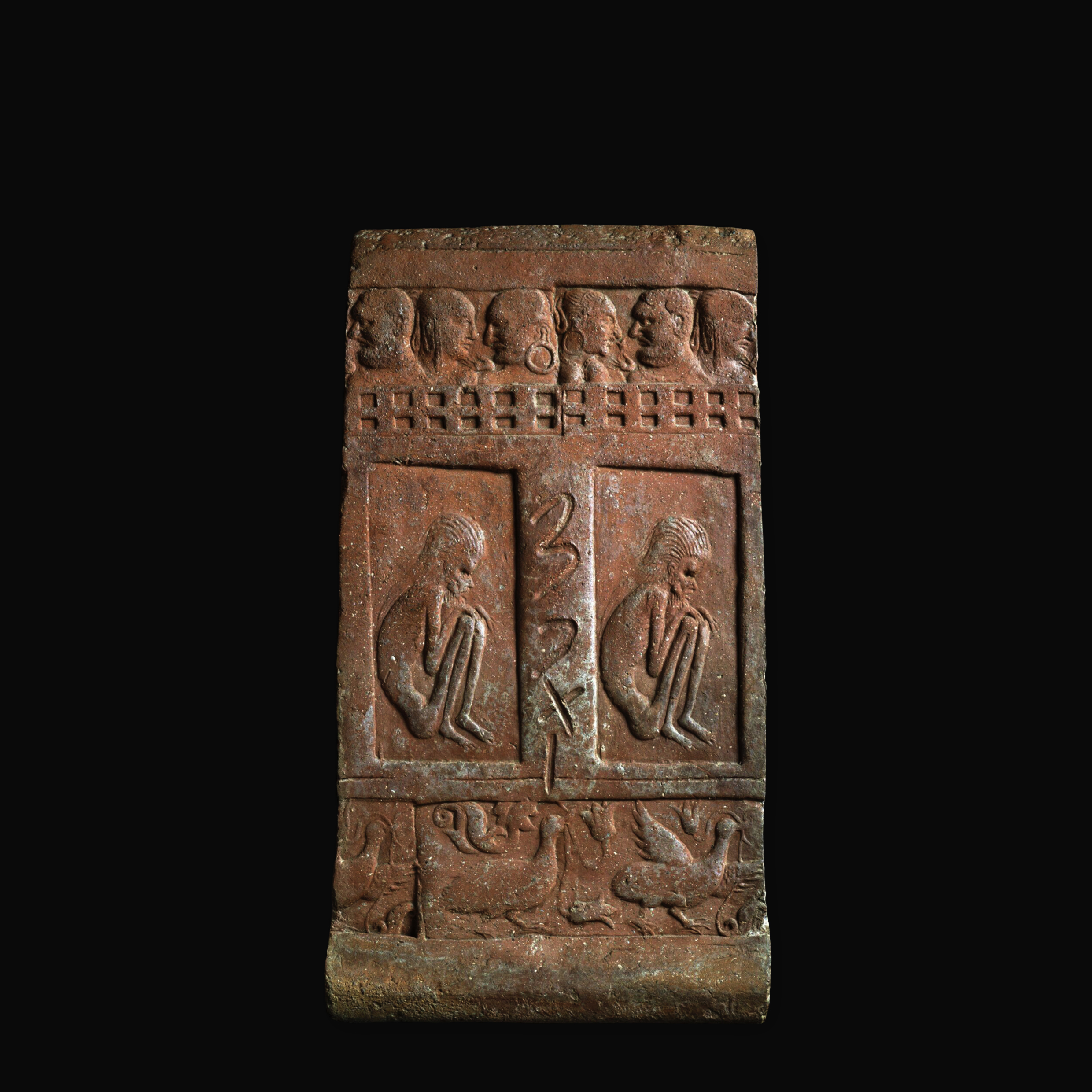
Under Kushan patronage, Kashmir emerged as a major centre of Buddhist scholarship, associated with the Fourth Buddhist Council. Artistic production in stone, terracotta, and metal expanded significantly, reflecting refined craftsmanship and spiritual purpose [5][6]. The works from this time reveal a sophisticated understanding of form and symbolism, where craftsmanship served spiritual purpose.
Terracotta Tile, Kashmir (Moulded Terracotta, Kushan Period, c. 3rd–5th century CE). Victoria and Albert Museum, London. Accessed via Victoria and Albert Museum Collections.https://collections.vam.ac.uk/item/O67325/tile-tile-unknown/
4. Hindu Kingdoms: Monumentality and Refinement
Temple Arts under the Karkota Dynasty (6th–12th century CE)
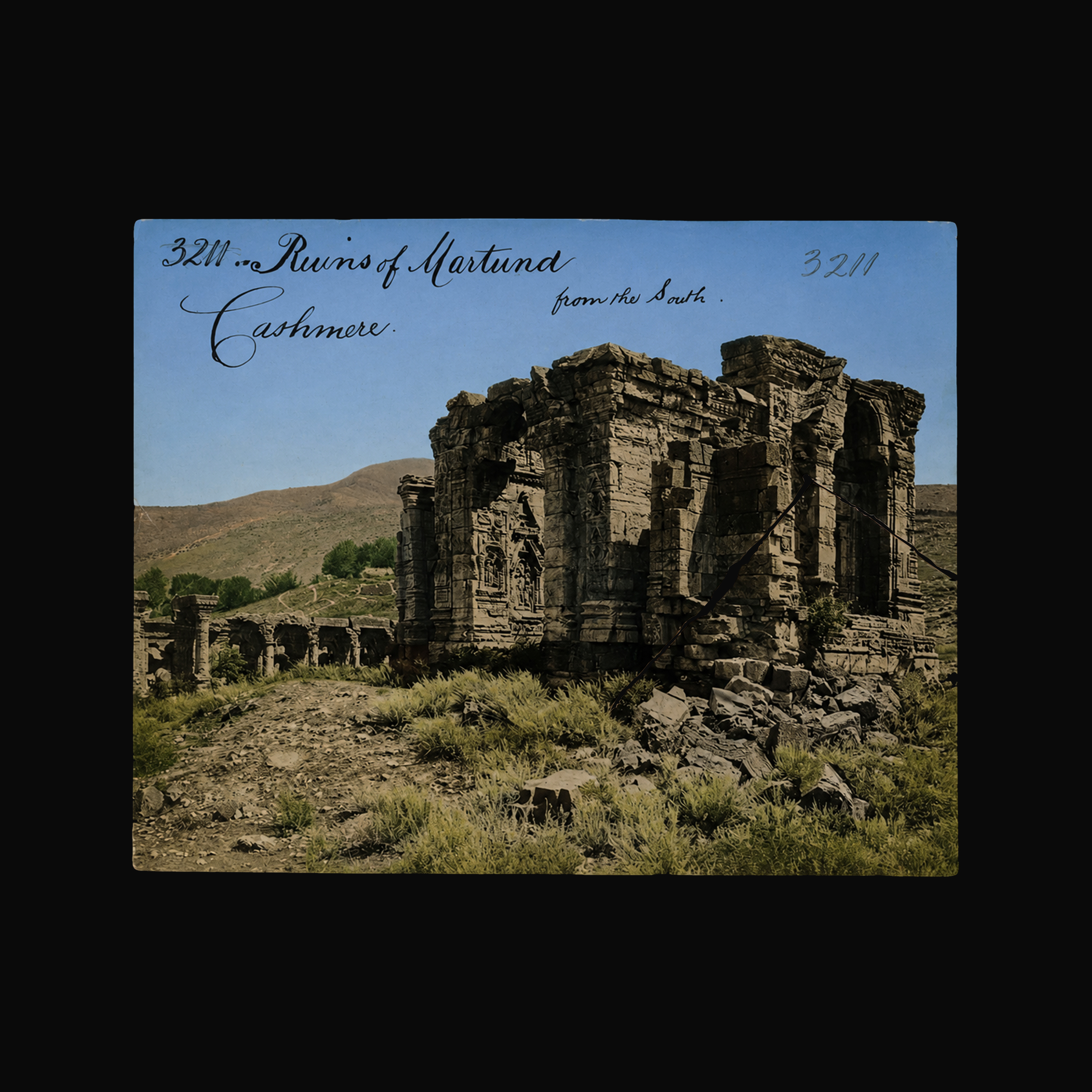
Temple architecture and sculptural traditions flourished during this period, with sites such as Martand Sun Temple exemplifying advanced engineering and sculptural precision. Artistic practices emphasized iconography, compositional balance, and sacred symbolism [7][8]. Alongside architecture, metalwork in bronze and copper developed further, reinforcing the integration of ritual, art, and craftsmanship.
Martand Sun Temple, 8th century, Kashmir (Albumen Photograph, c. 1865), by Francis Frith. Victoria and Albert Museum, London. Reproduced via Hindu Aesthetic.https://hinduaesthetic.medium.com/m%C4%81rt%C4%81%E1%B9%87%E1%B8%8Da-32673a77a1f
5. Kashmir and the Silk Route: Exchange and Synthesis
Cross-Cultural Influences (7th–14th century CE)
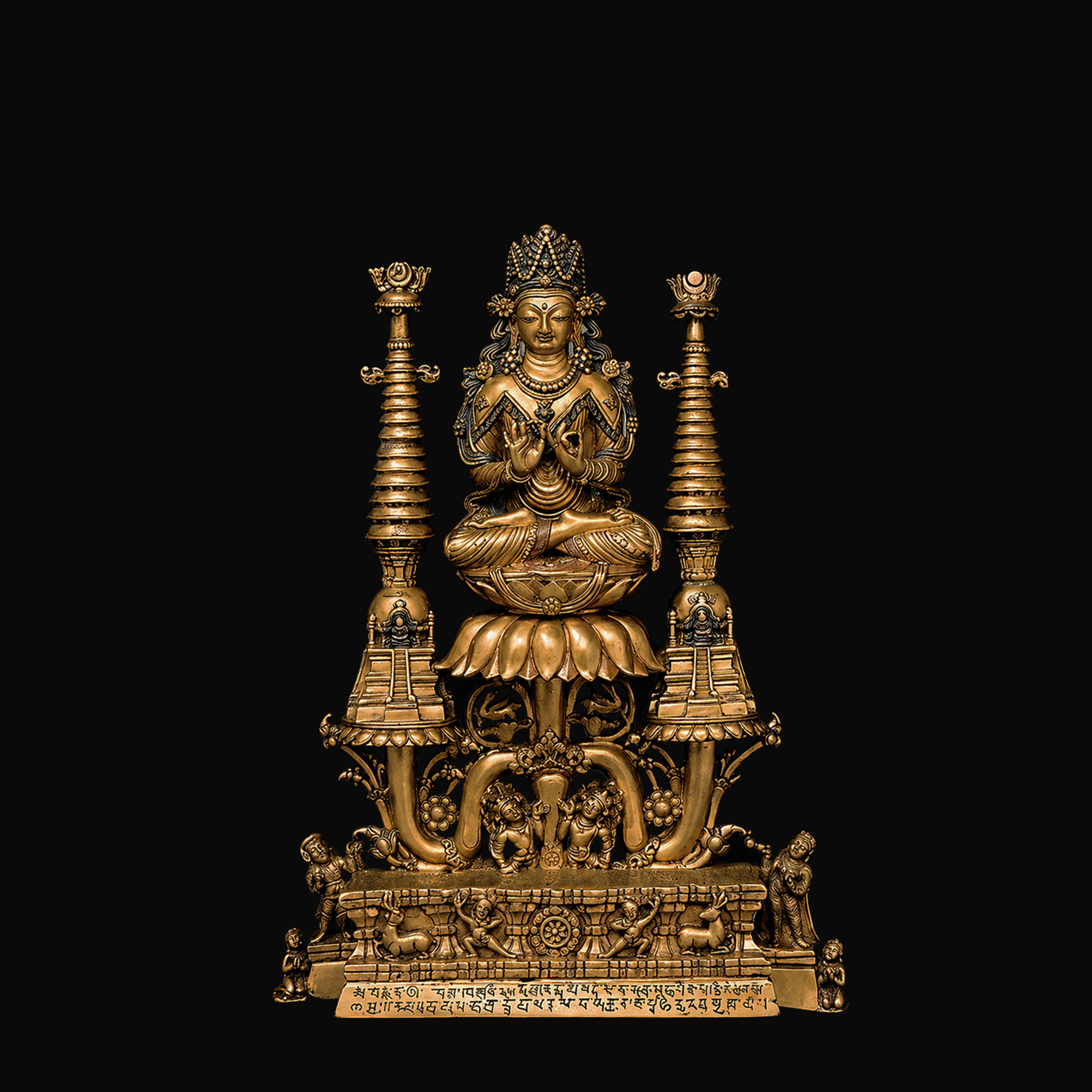
Kashmir's position along major trade routes facilitated cultural exchange with Central Asia, Persia, and the Indian subcontinent. This resulted in the assimilation of diverse motifs and techniques into a distinct regional aesthetic [9]. Motifs such as the chinar leaf, lotus, and cypress emerged as enduring visual elements, reflecting both the natural environment and broader cosmological ideas. This period marks a synthesis of earlier traditions with new cultural forms, shaping the distinctive identity of Kashmiri craftsmanship.
Crowned Buddha Shakyamuni (Copper Alloy Sculpture, Kashmir or Northwestern Himalayan Region, c. 8th–11th century CE). Asia Society Museum, New York. Accessed via Asia Society Museum Collection.https://sites.asiasociety.org/asianjourneys/rise-of-south-asian-southeast-asian-and-himalayan-art-collecting/
6. The Shah Miri Dynasty: The Persianate Transformation
Craft Expansion under Mir Sayyid Ali Hamadani (14th century)
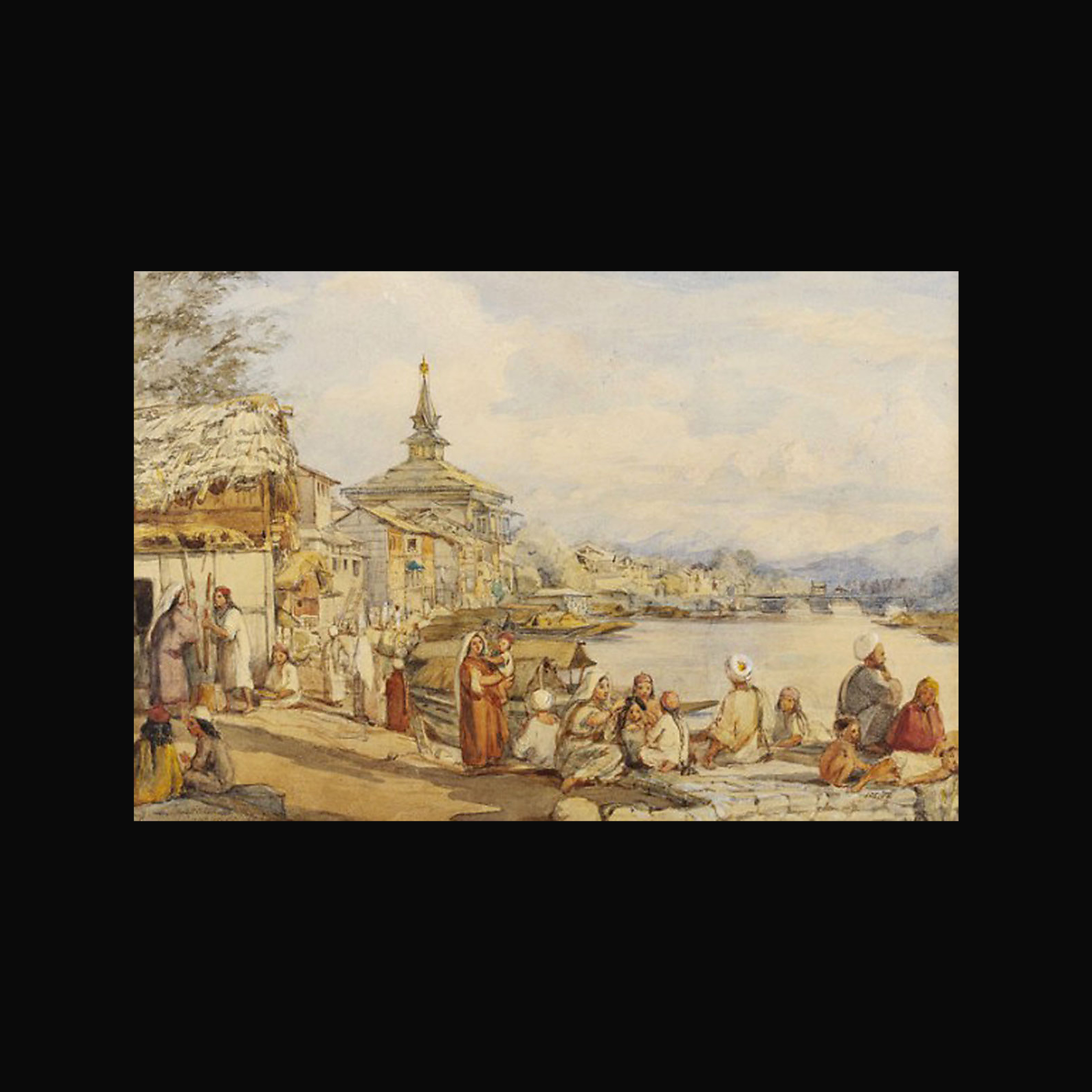
The rule of the Shah Mir dynasty in Kashmir (1339–1561) marked a significant phase in the growth of arts and crafts. Founded by Shah Mir after the reign of Rinchan (Rinchana), the Ladakhi Buddhist ruler whose conversion to Islam marked an important turning point in Kashmir's religious and political history, this period witnessed strong cultural influences from Persia and Central Asia [16]. An important contemporary figure was Sayyid Ali Hamdani, a 14th-century Sufi saint whose visits to Kashmir had a lasting cultural impact [18]. His arrival marked a transformative moment, introducing new crafts and organized workshop systems (karkhanas), marking the beginning of a more structured and collaborative approach to production [10]. Sayyid Ali Hamdani is credited with bringing skilled artisans from Persia and promoting crafts such as shawl weaving, carpet making, wood carving, and papier-mâché [17][18].
These crafts later became central to Kashmir's economy and identity [20]. The Shah Mir rulers supported these developments by encouraging cultural exchange and providing patronage to artisans [16]. This led to a blend of local traditions with Persian artistic styles [19]. Architecture and decorative arts also flourished during this time. Mosques, shrines, and houses were decorated with intricate woodwork and detailed designs, reflecting both religious and artistic values [20]. The overlap between Shah Mir rule and Hamdani's influence created a strong foundation for Kashmir's artistic heritage for which Kashmir remains famous today.
Khanqah of Shah Hamadan on the Jhelum River, Srinagar originally built in 1395 CE (Watercolour Painting, Kashmir, c. 19th century). Mpositive – Mir Syed Ali Hamadani. Accessed via Mpositive Archive.https://www.mpositive.in/tag/mir-syed-ali-hamadani/
7. Sultanate Golden Age
Patronage under Zain-ul-Abidin (15th century)
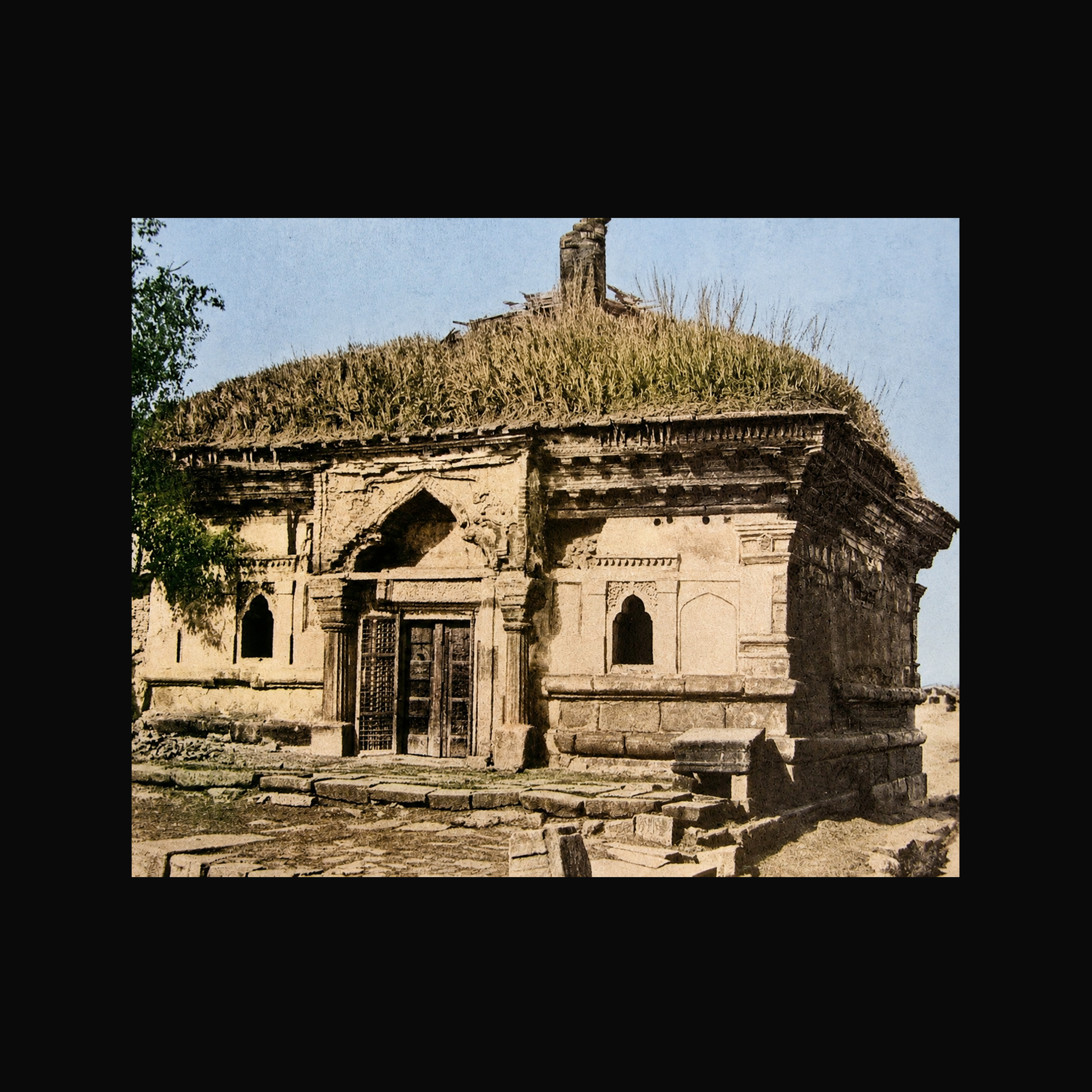
Zain-ul-Abidin's reign (r. 1420–1470) fostered further artistic growth through unprecedented state patronage, improving technical standards and establishing a recognizable Kashmiri craft identity [11]. Artisanship was actively cultivated as both cultural expression and economic strategy. Under his patronage, Kashmir developed a more recognizable and refined artistic identity shaped by Persian, Central Asian, and indigenous traditions.
A remarkable example of this synthesis survives in the shrine of Sayyid Muhammad Madni (Madin Sahib), built in 1444 in Srinagar. Once adorned with glazed tiles depicting a centaur-like archer whose tail transformed into a dragon's head, the shrine preserves one of the rare surviving examples of figurative art in Kashmiri Islamic architecture. The motif reflects a striking fusion of Persian and Chinese artistic vocabularies, revealing Kashmir's continued engagement with wider trans-Asian visual cultures [22].
Madin Sahib Mosque (Architectural Complex, Srinagar, Kashmir, 15th century CE; photograph c. early 20th century). Accessed via Search Kashmir Archive.https://searchkashmir.org/why-is-madin-sahib-locked/
8. Mughal Kashmir: Luxury, Precision and Global Reach
Imperial Aesthetics under Akbar (16th–18th century)
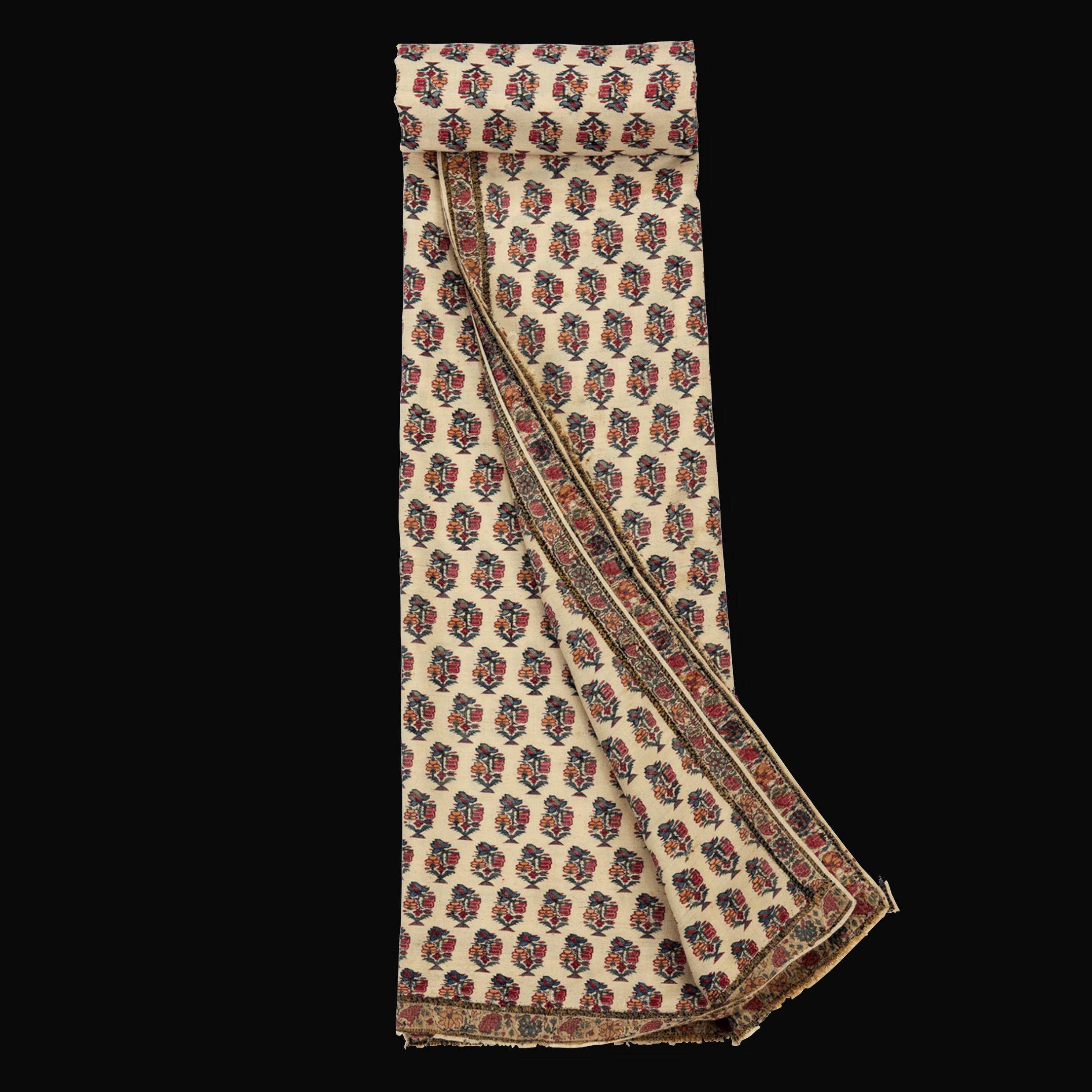
Mughal annexation introduced refined aesthetics emphasizing naturalism, symmetry, and controlled ornamentation. Kashmiri crafts achieved high levels of sophistication and gained international recognition [12]. They moved, were used, adapted, and recontextualized. Kashmir became a centre for luxury goods, producing objects that combined technical mastery with visual elegance. By 17th and 18th century, Kashmiri crafts became significant export commodities, circulating across Central Asia, Europe, and the Middle East, reinforcing the region's artistic reputation [9][12].
During this time, Kashmiri crafts became more elaborate and luxurious. Shawls gained international fame for their softness and intricate designs, Carpets achieved extraordinary knot density and compositional complexity, Metalwork incorporated techniques such as enamelling (meenakari), while wood carving achieved remarkable intricacy, especially in walnut wood. The Mughal aesthetic introduced refined floral patterns, symmetry, and a sense of grandeur that became hallmarks of Kashmiri design. Many motifs like paisleys, vines, and garden-inspired patterns, still seen today, have their roots in this period.
Long Jamawar Shawl (Pashmina Wool Jamawar Textile, Kashmir, early 18th century CE). Accessed via Christie's Archive.https://onlineonly.christies.com/s/important-private-collection-kashmir-shawls/long-jamawar-panel-62/71461
9. Political Transitions: Resilience of Craft
Afghan, Sikh, and Dogra Rule (18th–19th century)
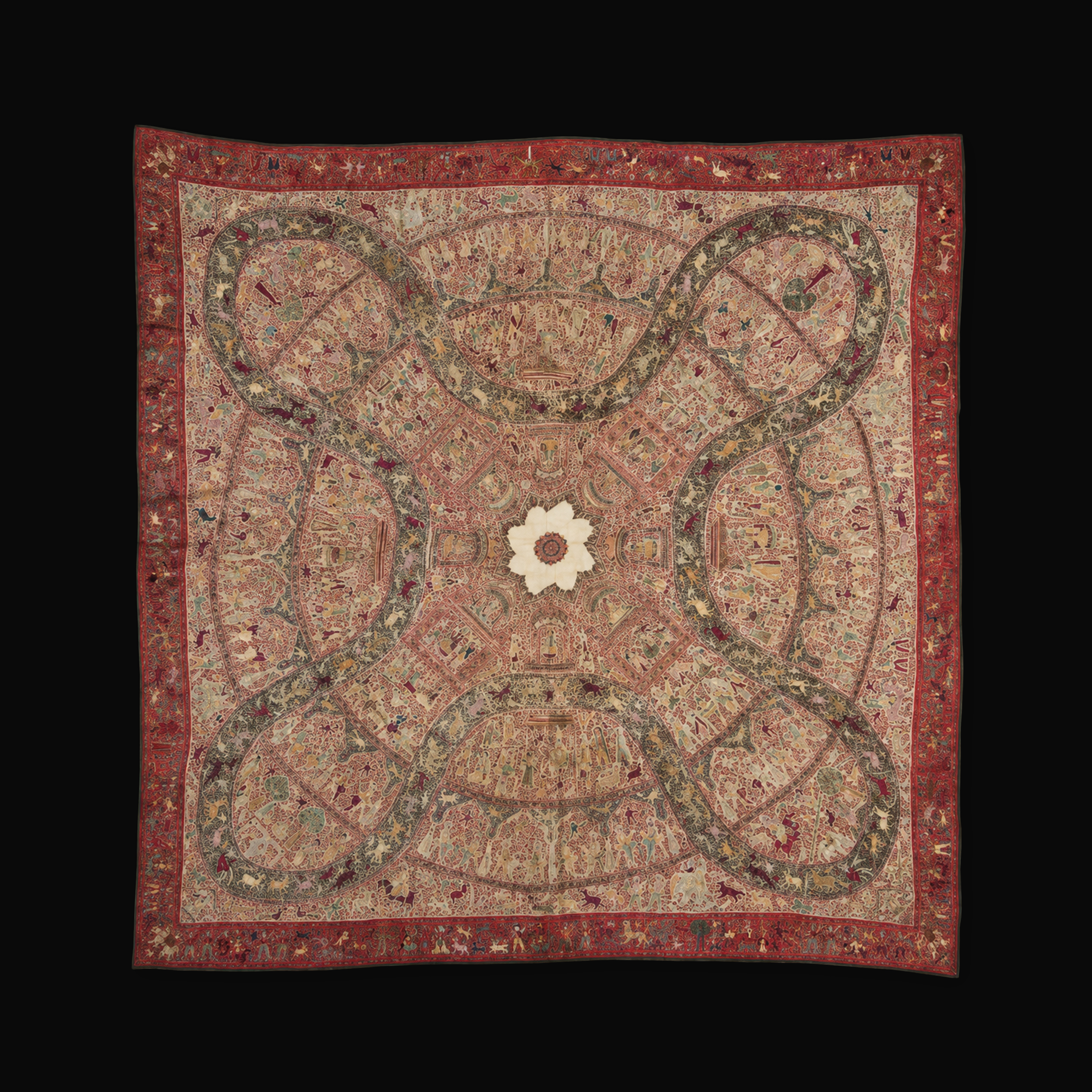
Following the decline of Mughal authority, Kashmir underwent periods of political instability under successive regimes. Despite political instability, craft traditions persisted and adapted, demonstrating resilience and continuity under changing regimes [13]. Production became more market-oriented. Artisans continued to produce traditional items, though often under difficult circumstances. The resilience of these crafts during periods of upheaval is a testament to their importance in Kashmiri identity.
Embroidered Figural Square Rumal (Embroidered Pashmina Textile, Kashmir, c. 1835–45 CE). Accessed via Christie's Archive.https://onlineonly.christies.com/s/important-private-collection-kashmir-shawls/embroidered-figural-square-shawl-amli-rumal-55/71455
10. Colonial Encounter and Decline: Industrial Challenge
19th–early 20th century Transformations
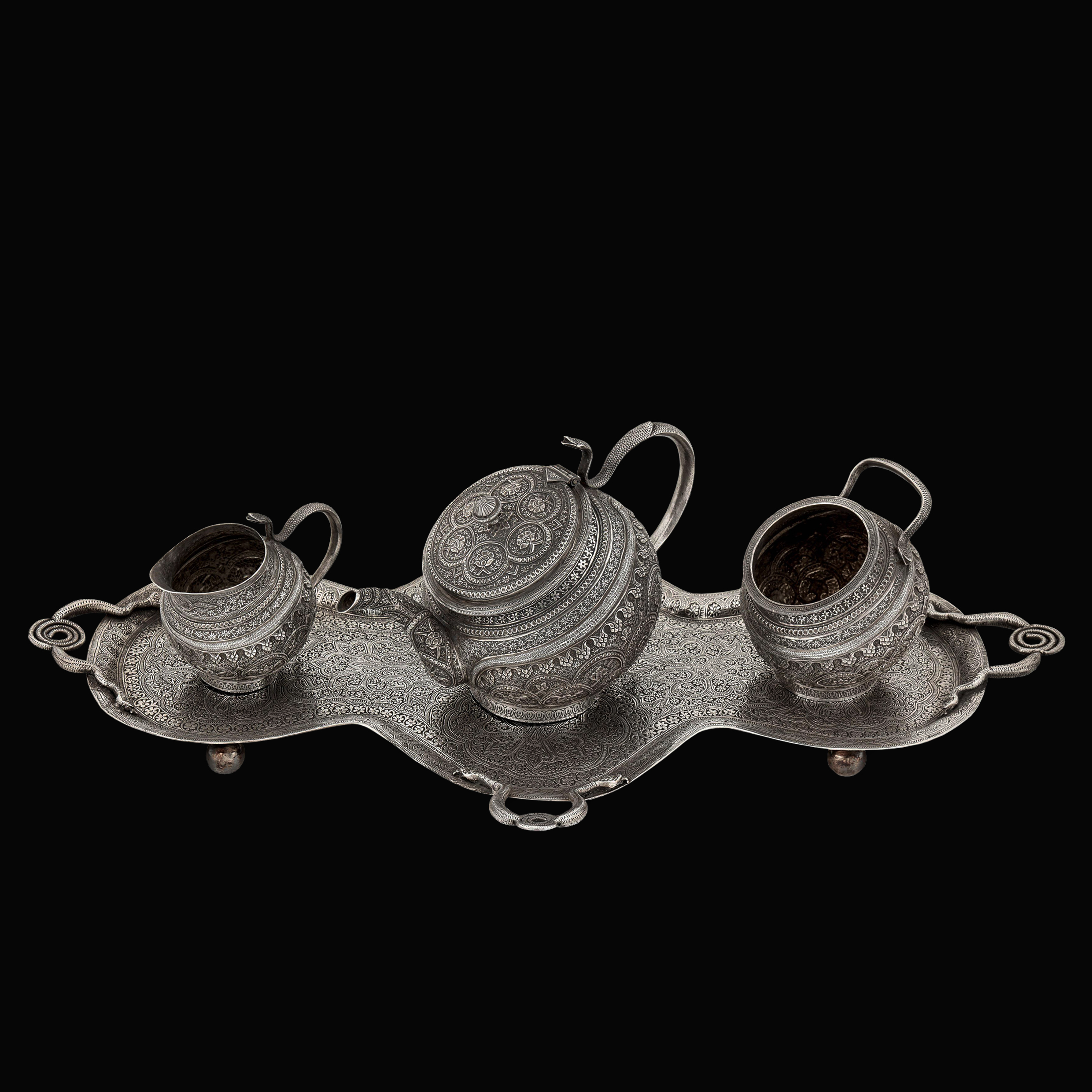
European demand, particularly for shawls, briefly revitalized the craft economy, but industrialization introduced competition from machine-made goods, leading to decline in traditional production [14]. Many artisans were forced to abandon their crafts or shift to less skilled labour. However, despite these challenges, certain crafts, especially shawls and carpets, continued to find niche markets due to their superior quality.
Anglo-Indian Silver Three-Piece Tea Service of Kang Form, Kashmir, c. 1900 CE. Chiswick Auctions, London. Accessed via Invaluable Auction Archive.https://www.invaluable.com/auction-lot/a-late-19th-early-20th-century-anglo-indian-unmar-98-c-56c488f81a/
11. Modern Kashmir: Survival, Revival, and Reinterpretation
20th century afterwards
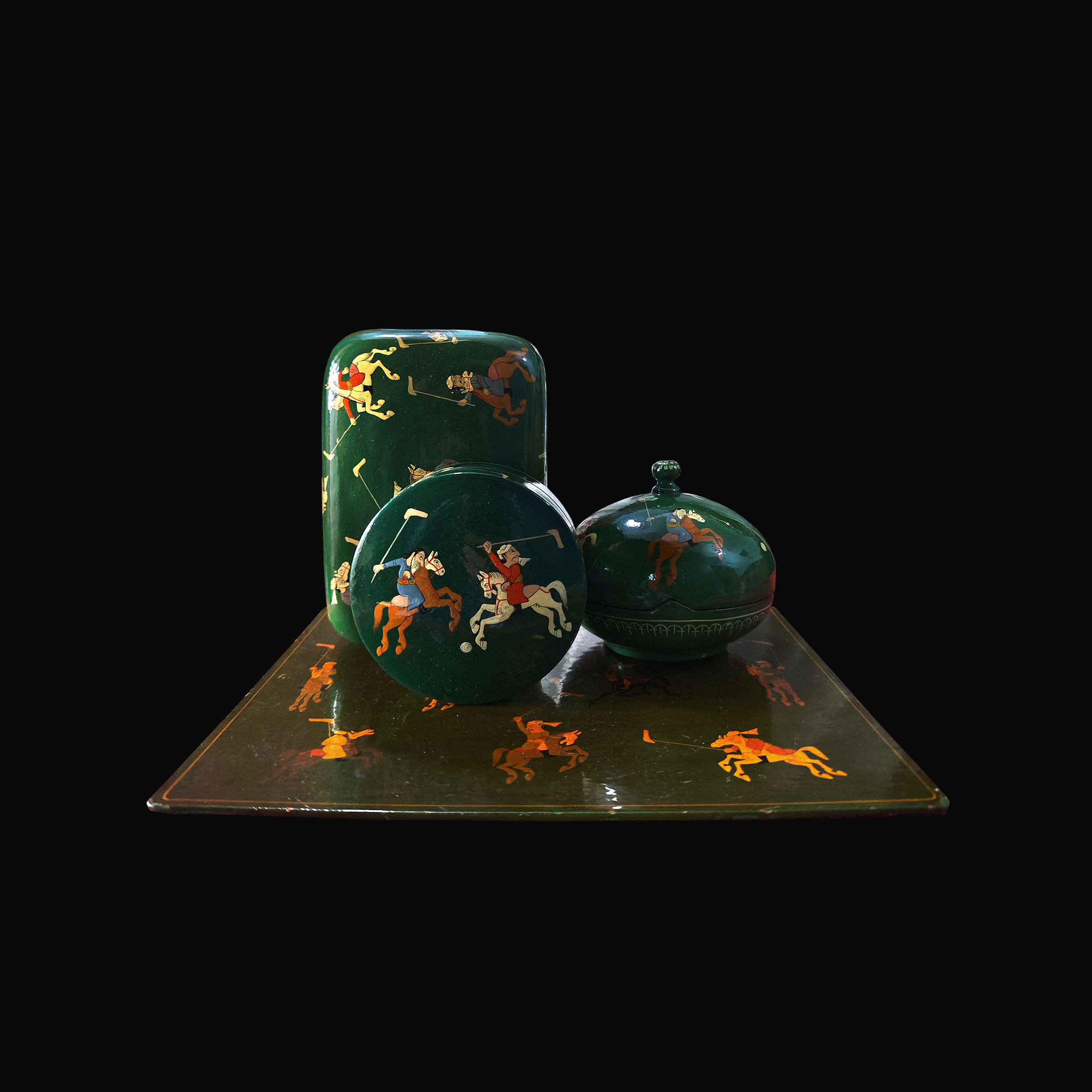
Modern revival efforts through government initiatives and global recognition have helped sustain Kashmiri crafts, many of which now hold protected (GI) status; most notably Kashmiri Pashmina, Kani shawls, Sozni embroidery, Kashmiri carpets, Papier-mâché, Walnut wood carving, and Khatamband [11][15]. While adapting to contemporary markets, artisans continue to uphold techniques passed down through generations. Today, Kashmiri arts and crafts stand as enduring symbols of cultural resilience, bridging tradition and modernity. Their survival reflects not only artistic excellence but also cultural resilience.
Lacquered Papier-Mâché Ensemble with Polo Motifs (Kashmir, second half of the 20th century CE). Traam and Beyond Private Collection.
References
[1] Archaeological Survey of India. Excavation Reports: Burzahom. New Delhi: ASI.
[2] Sri Pratap Singh Museum. Catalogue of Neolithic Collections. Srinagar: SPS Museum.
[3] Nilamata Purana. Translated editions. Various publishers.
[4] Rowland, Benjamin. The Art and Architecture of India: Buddhist, Hindu, Jain. Harmondsworth: Penguin Books.
[5] UNESCO. Buddhist Heritage of Kashmir and Central Asia. Paris: UNESCO Publications.
[6] Siudmak, Jacek. The Buddhist Heritage of Kashmir. New Delhi: Oxford University Press, 2013.
[7] Archaeological Survey of India. Monuments of Kashmir: Temple Architecture Reports. New Delhi: ASI.
[8] Kak, Ram Chandra. Ancient Monuments of Kashmir. London: Luzac & Co., 1933.
[9] UNESCO. The Silk Roads: History and Heritage. Paris: UNESCO Publishing.
[10] Roxburgh, David J. (ed.). The Arts of the Islamic World, 640–1800. London: Thames & Hudson.
[11] Development Commissioner (Handicrafts). Handicrafts of Kashmir. New Delhi: Ministry of Textiles, Government of India.
[12] Welch, Stuart Cary. The Mughal Emperors and Their Courts. London: Thames & Hudson.
[13] Bamzai, P. N. K. Culture and Political History of Kashmir. New Delhi: M.D. Publications.
[14] Irwin, John. The Kashmir Shawl. London: Victoria and Albert Museum, 1973.
[15] Indian National Trust for Art and Cultural Heritage (INTACH). Documentation of Kashmiri Crafts. New Delhi: INTACH.
[16] Bamzai, P. N. K. (1994). Culture and Political History of Kashmir. New Delhi: M.D. Publications.
[17] Lawrence, W. R. (1895). The Valley of Kashmir. London: H. Frowde.
[18] Rizvi, S. A. A. (1983). A History of Sufism in India, Vol. I. New Delhi: Munshiram Manoharlal.
[19] Digby, S. (2004). 'Before Timur Came: Provincialization of the Delhi Sultanate through the Fourteenth Century.'
[20] Khan, M. I. (1978). Kashmir's Transition to Islam: The Role of Muslim Rishis. Manohar.
[21] Harmatta, J. (1994). History of Civilizations of Central Asia, Vol. II. UNESCO.
[22] Haider, T. (2025). 'Kashmir’s Sufi Shrines: Mausoleum, Khanqah, History and Heritage under Mughal Rule.' Frontline.https://frontline.thehindu.com/photo-essay/kashmir-sufi-shrines-srinagar-mausoleum-khanqah-history-heritage-islam-mughal-rule/article69075736.ece