Ritual Vessel from a Watuk Assemblage
(Watuk — Toke) وَٹُک — ٹوک
Late 19th – early 20th century
Origin: Kashmir
Material: Terracotta
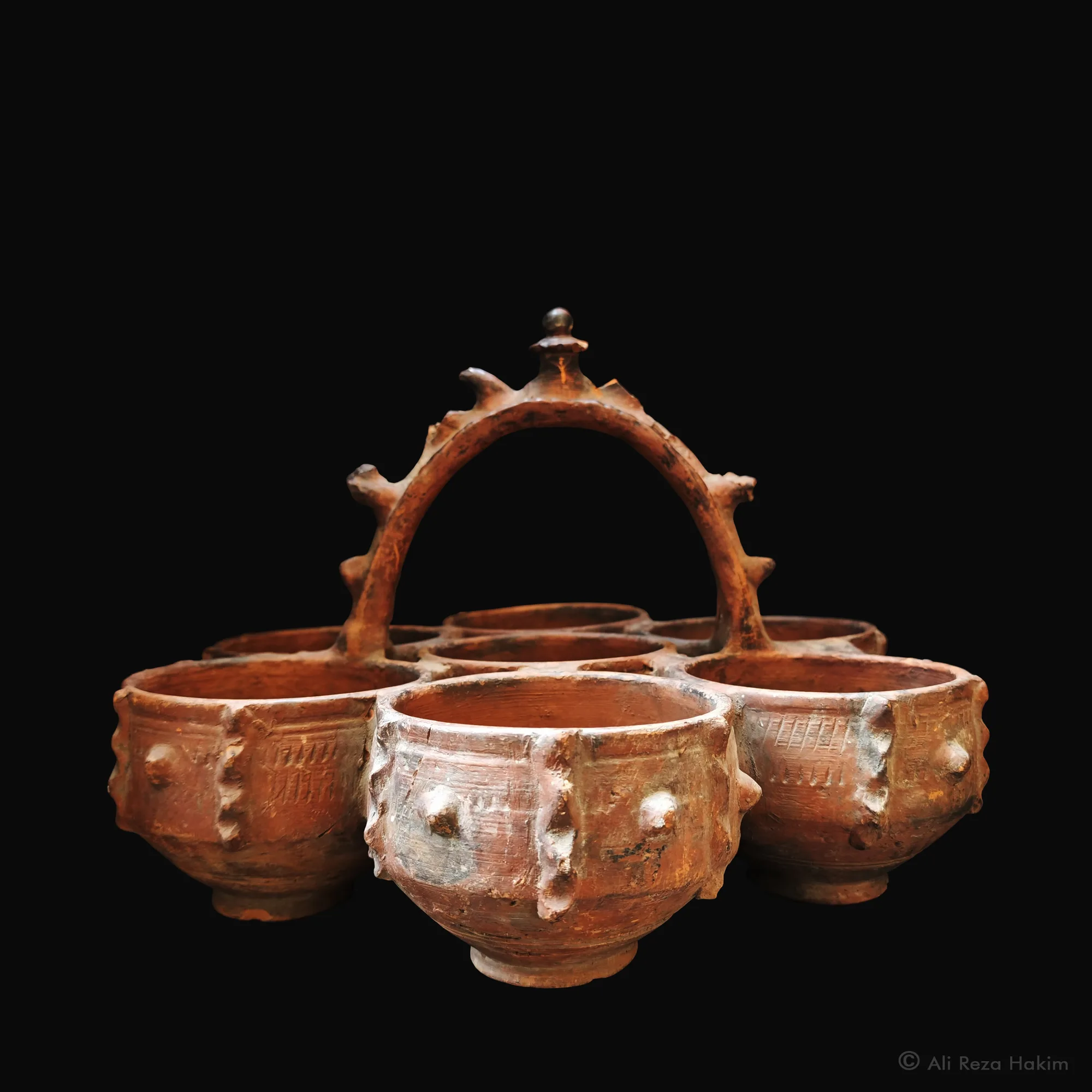
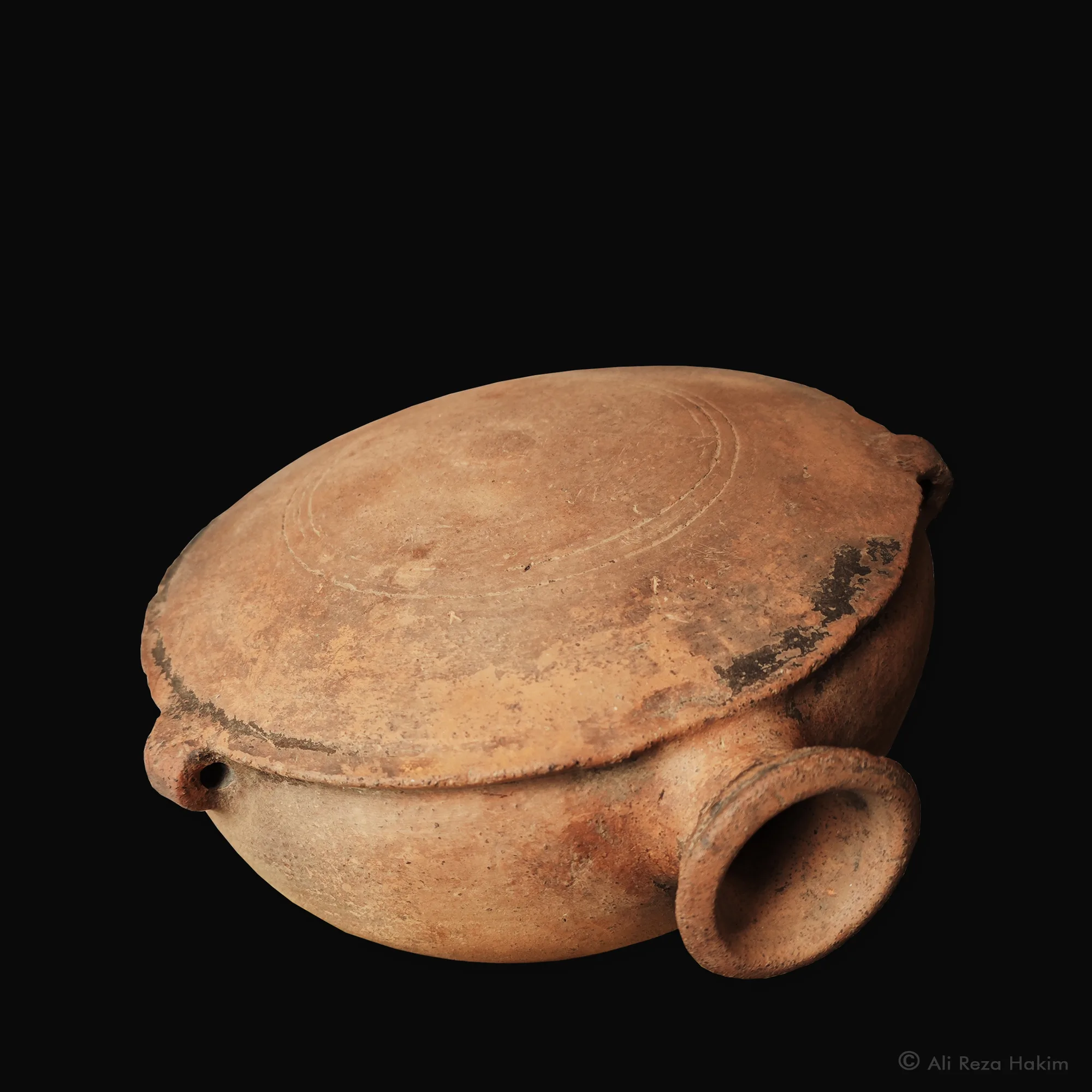
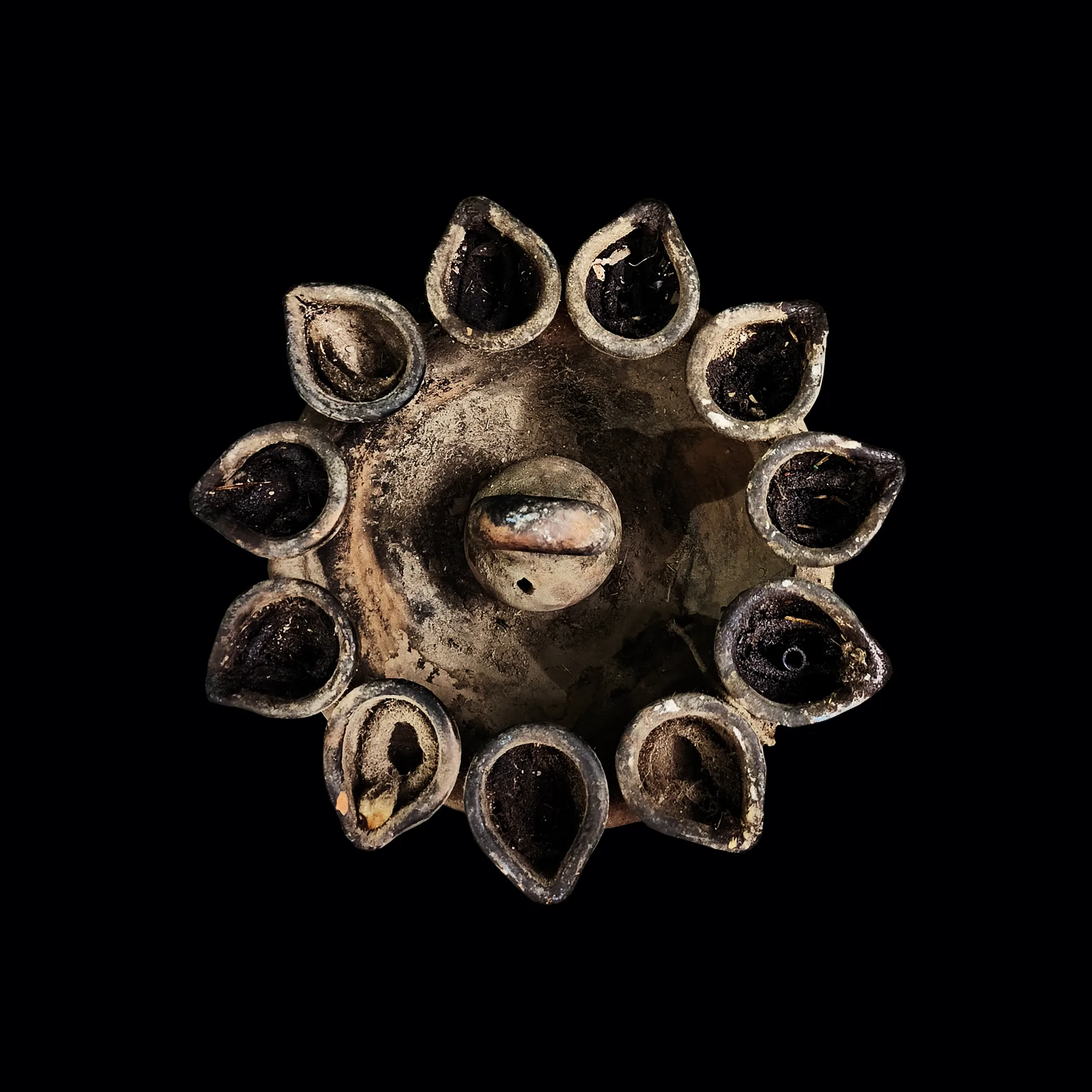
This unusual and rare terracotta object is best attributed as a part of the traditional Watuk assemblage, the collection of ritual vessels used by Kashmiri Pandit families during Herath, the Kashmiri celebration of Shivratri.
Its configuration is particularly significant in the context of Kashmiri ritual pottery. Traditional accounts of the Watuk describe a ritual associated with the worship of Shiva and Shakti during Herath, and the vessels as representing Shiva, Parvati, Ganesha, the Sapta Rishis (Seven Sages) and other sacred figures. The composition of the Watuk could vary considerably according to family tradition (reeth). Several descriptions specifically record seven small clay vessels or saucer-like forms called Toke.
The present object is especially interesting because the seven receptacles have been individually formed and physically united into a single vessel. The vessel is made from unglazed fired clay, its warm terracotta surface retaining the irregularities and traces of hand manufacture. The simplicity of the clay contrasts with the complexity of the ritual it served. Small projections around the exterior and the broad, almost branch-like handle give the object a remarkably archaic and sculptural character.
Terracotta has historically occupied an important place in Kashmiri domestic and ceremonial life. What makes this object especially valuable is its ability to preserve the material side of a ritual that was fundamentally communal and seasonal. This was not a vessel made merely for display. It belonged to an annual cycle in which earthenware was brought into the household, filled with water and offerings, worshipped, and subsequently put away or discarded according to custom.
Private collection: Traam and Beyond