Enamelware

میناکاری

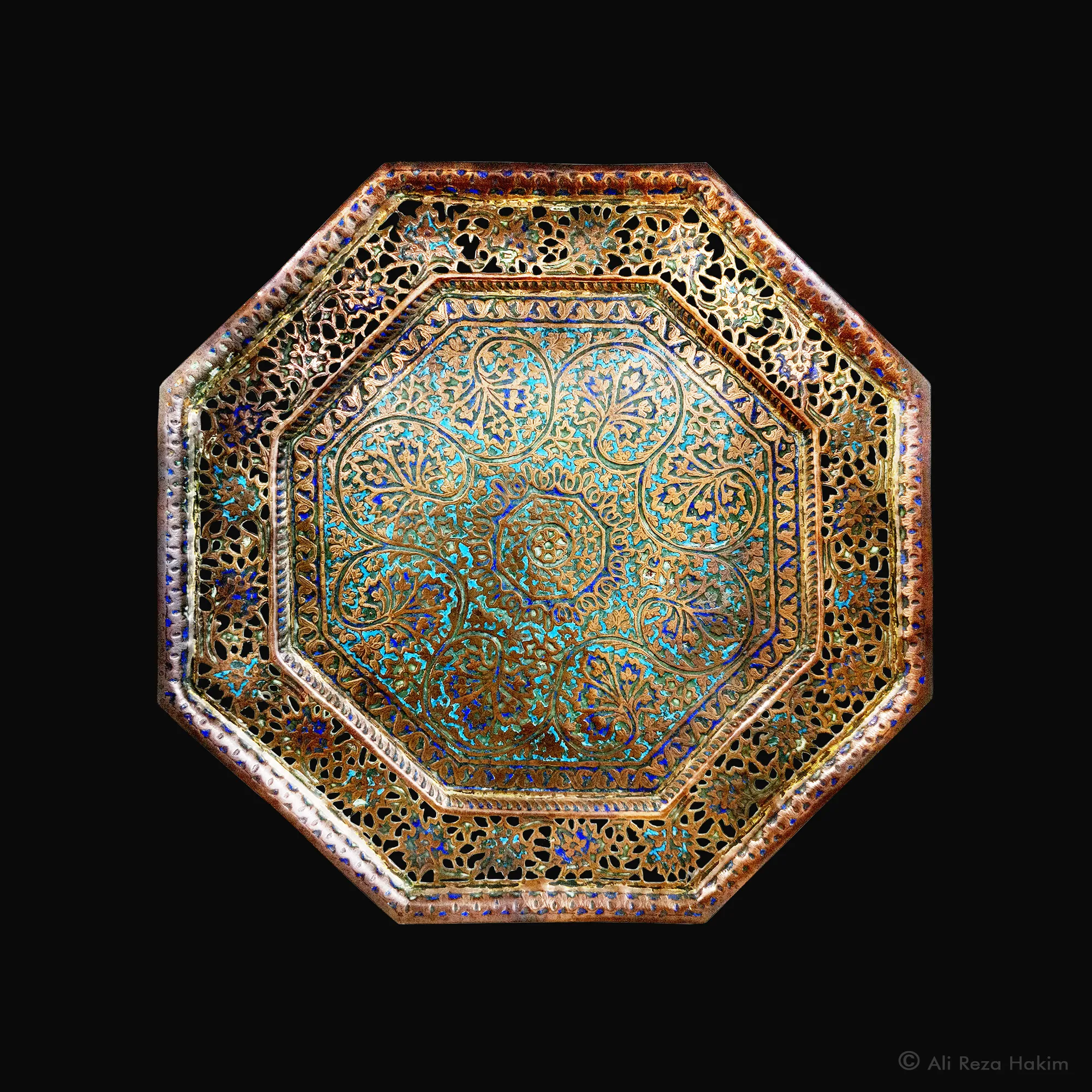
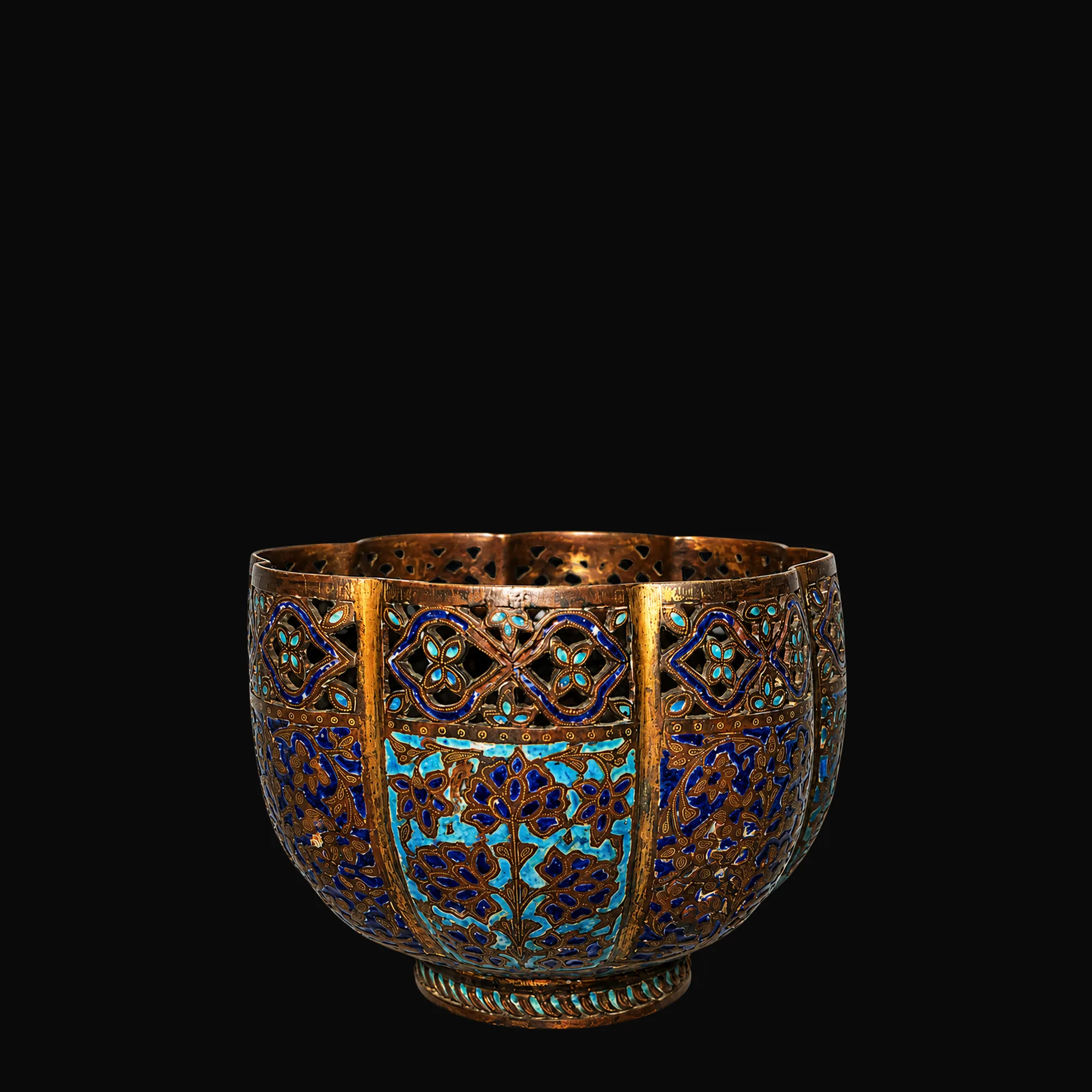
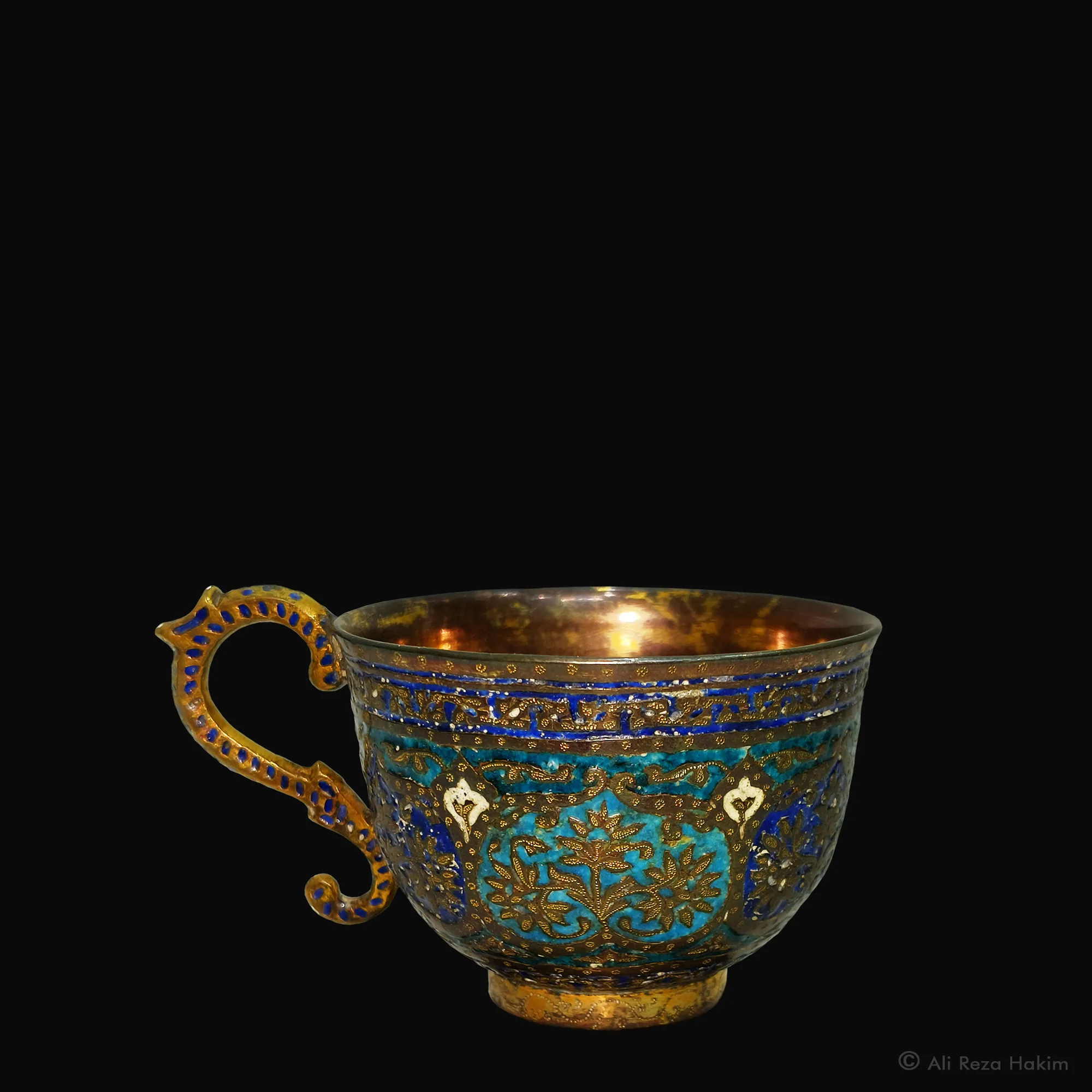
Enamelwork in Kashmir represents a confluence of metal and colour. Applied to copper, brass or silver surfaces, vitreous enamel was fused through heat, creating richly coloured, durable and jewel like decoration in tones of turquoise, cobalt, deep red and sometimes, yellow and white. Historically practiced between the late Mughal and 19th century periods, enamelwork today represents a largely extinct craft tradition. Surviving pieces are important not only as antiques but as evidence of a lost technical tradition.

Oil Lamp — image 1

Oil Lamp

(Choong) ژوٗنگ

19th century Origin: Kashmir Material: Gilded Copper with polychrome enamel Provenance: Europe A finely worked Kashmiri oil lamp, distinguished by its serpent-form handle and richly coloured polychrome enamelling. The sinuous creature is not merely an applied ornament but becomes an integral part of the object's silhouette, giving the lamp an animated and almost zoomorphic character. The copper surface is densely ornamented with brightly coloured enamel in turquoise, green, blue, yellow, red and white, set within engraved and chased outlines. The decoration is arranged in repeating floral and foliate compartments, with a prominent radiating rosette and smaller scrolling motifs distributed across the body. Selective gilding heightens the relief and gives the copper a warm, jewel-like brilliance. This lamp is particularly interesting as an example of the Kashmiri decorative arts produced for the export market, especially during the late nineteenth and early twentieth centuries when Kashmiri metalwork attracted considerable interest among European travellers, collectors and connoisseurs. Objects made for this market often retained the vocabulary of traditional Kashmiri ornament while adopting forms, colours and decorative exuberance that appealed to contemporary European tastes. The combination of engraved copper, coloured enamel, gilded highlights and an imaginative animal-form handle makes this lamp a particularly evocative example of Kashmir's nineteenth-century metalworking tradition in which indigenous craftsmanship encountered the cosmopolitan tastes of the international market. Private collection: Traam and Beyond
Not for Sale
Water Flask — image 1

Water Flask

(su-rahi) سُراحی

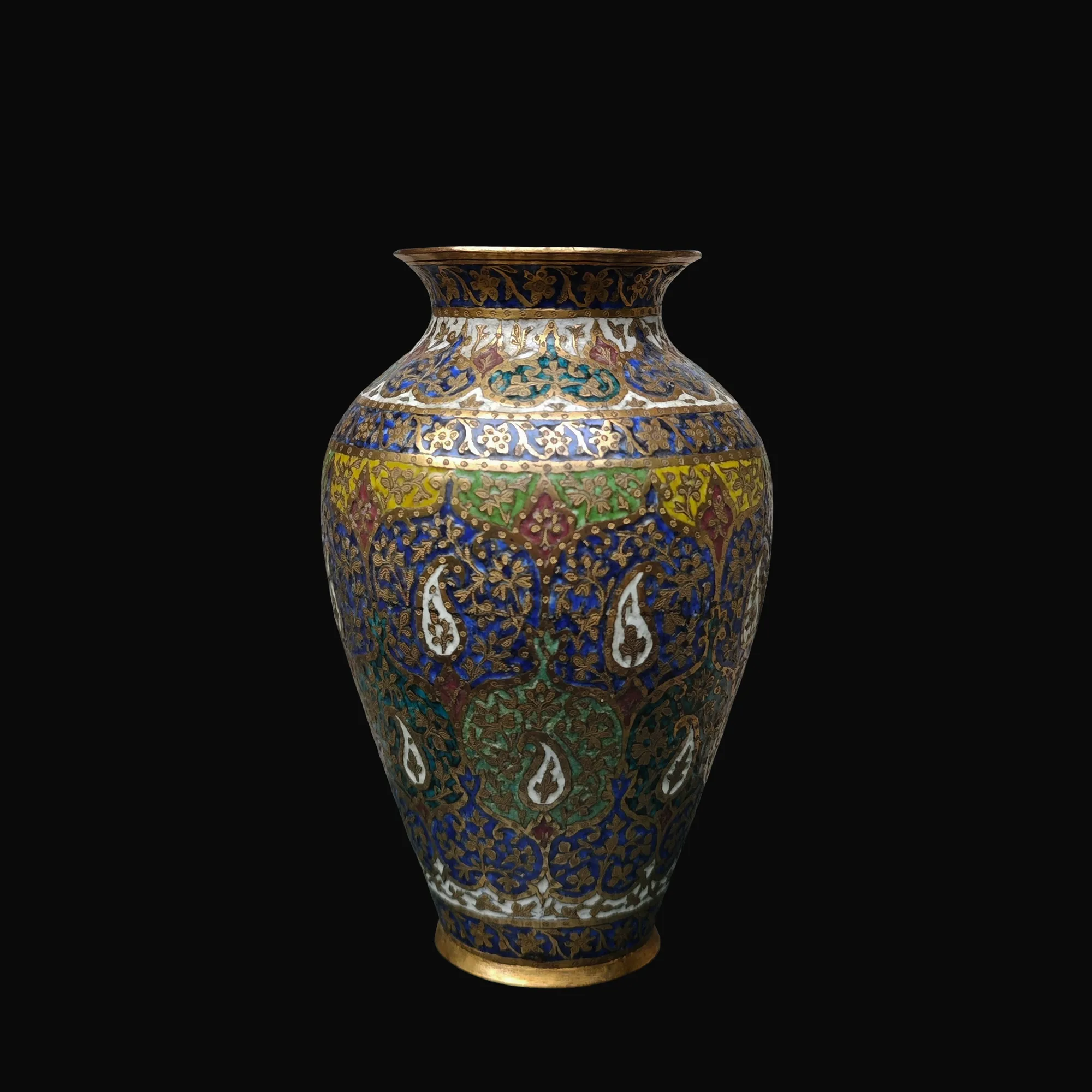
19th century Origin: Kashmir Provenance: Europe Material: Gilded Copper with polychrome enamel A finely crafted Kashmiri copper surahi, a traditional vessel type with a long history across the Indian subcontinent and the wider Persianate world. The entire surface is animated by an exceptionally rich programme of polychrome enamel and gilded decoration. Deep blues and turquoise are set against greens, yellows, reds and pale enamel grounds, producing a jewel-like surface that contrasts beautifully with the warm copper beneath. The decoration consists of scrolling foliage, stylised floral forms and repeating arabesque patterns, organised into horizontal bands and radiating panels that follow the changing contours of the vessel. The careful adaptation of the ornament to the vessel's changing geometry demonstrates the remarkable control of the Kashmiri metalworker. The result is a surahi in which function, geometry and ornament become inseparable The surahi was fundamentally a utilitarian vessel, designed to hold and serve water. Yet examples such as this occupy a space between utility and display. The lavish application of enamel, gilding and engraved ornament transforms an everyday vessel into an object of visual refinement, intended as much to be seen as to be used. This piece belongs to the period in which Kashmiri metalwork increasingly entered international markets. During the late nineteenth and early twentieth centuries, Kashmiri craftsmen produced richly decorated enamelware for both local patrons and European visitors and collectors. The extraordinary density of ornament and brilliant polychrome palette seen here are characteristic of the highly decorative objects that came to represent Kashmiri craftsmanship to audiences beyond the valley speaking of the cosmopolitan world into which Kashmiri craftsmanship travelled. Private collection: Traam and Beyond
Not for Sale