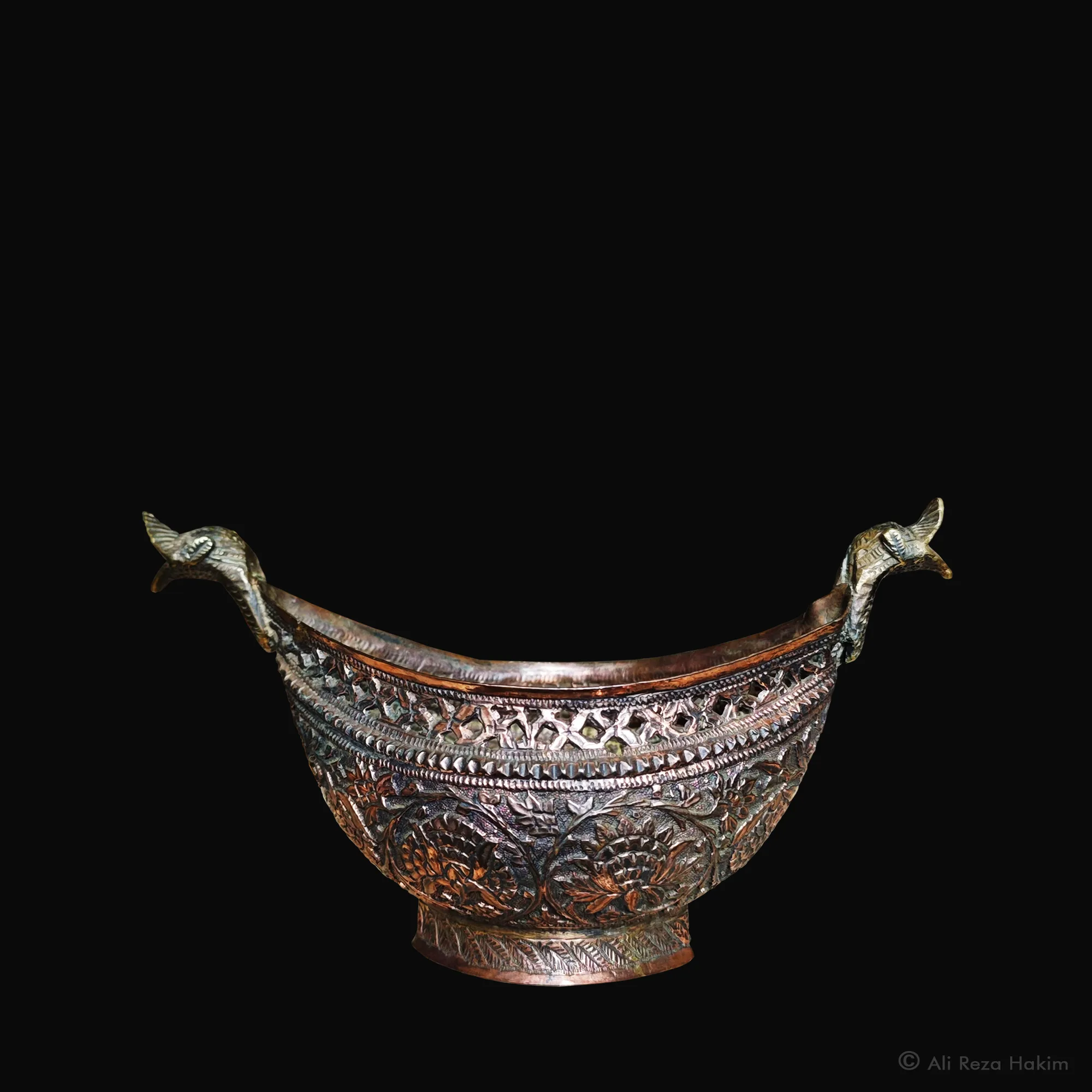
Sufi Begging Bowl
(Kashkul) کَشکُل
Late 19th–early 20th century Origin: Kashmir, India Provenance: Europe Material: Copper This finely worked Kashmiri copper kashkul is a traditional boat-shaped begging bowl associated with Sufi mendicants and dervishes. The name kashkul is of Persian origin and refers specifically to the bowl carried by wandering ascetics to receive alms. Within the Sufi tradition, the wandering dervish deliberately embraced poverty and dependence upon charity. The bowl therefore became a visual expression of renunciation and humility. The characteristic crescent or boat-like form has also been interpreted symbolically in Islamic art as an image of the emptying of the self and renunciation of worldly possessions. The vessel has the characteristic elongated, boat shaped body, raised on a broad splayed foot and terminates in sculpted zoomorphic heads. In traditional kashkuls, these projecting terminals were often pierced or fitted with rings so that a chain could be attached and the bowl carried or suspended. Some surviving examples appear to have been made not simply for everyday use by mendicants but as luxury objects commissioned by wealthy patrons, sometimes to be presented to Sufis or retained as objects of religious and cultural significance. Private collection: Trām and Beyond
Not for Sale
Enquire About This Item
Enquiring about: Sufi Begging Bowl