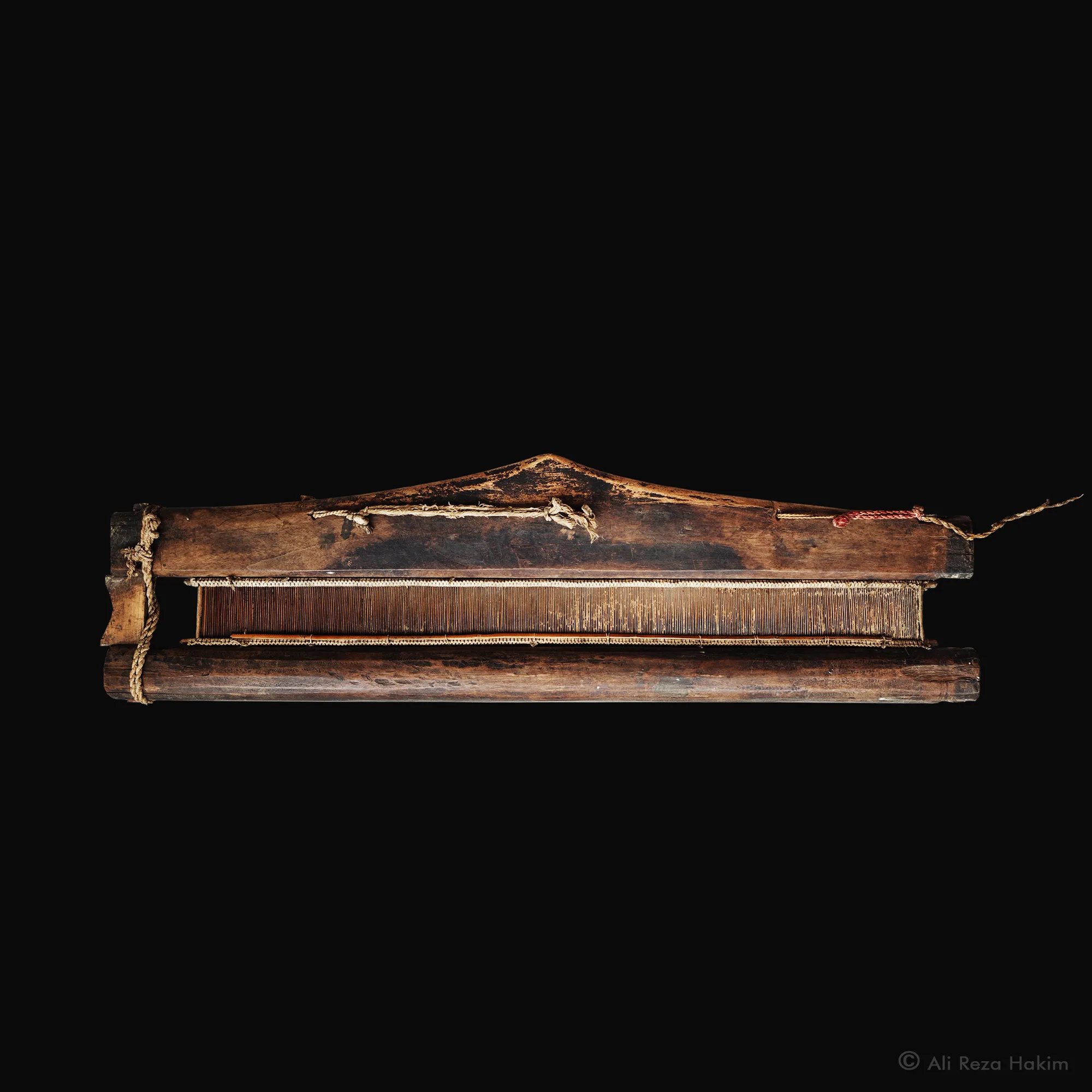
Kani weaving loom reed
(Kangu) کَنگُو
Late 19th–early 20th century Origin: Kashmir Material: Wood, reed A traditional Kani loom reed, constructed as a long wooden frame enclosing a dense row of extremely fine, closely spaced vertical teeth, forming a comb-like structure through which the warp threads would pass. The reed was used to maintain the spacing of the warp threads and to beat the weft firmly into place during weaving. The object is particularly associated with Kashmir's shawl-weaving tradition, including the weaving of fine pashmina and Kani textiles. The traditional loom itself was generally constructed from wood, with the warp stretched between beams, while a reed formed an essential part of the weaving apparatus. The surviving piece is especially interesting for its entirely hand-made construction. The long wooden casing, closely set teeth and simple fastening system reflect a period when individual components of the loom were made and repaired by specialist craftsmen rather than being standardized industrial parts. Its worn wood and irregularities are therefore evidence of prolonged practical use rather than merely decorative ageing. Photo courtesy: Urvat il Wuska, Kashmir’s Kani Shawl Weavers Feel Left Out in Cold, VillageSquare.in, 1 March 2023. Private collection: Trām and Beyond
Not for Sale
Enquire About This Item
Enquiring about: Kani weaving loom reed