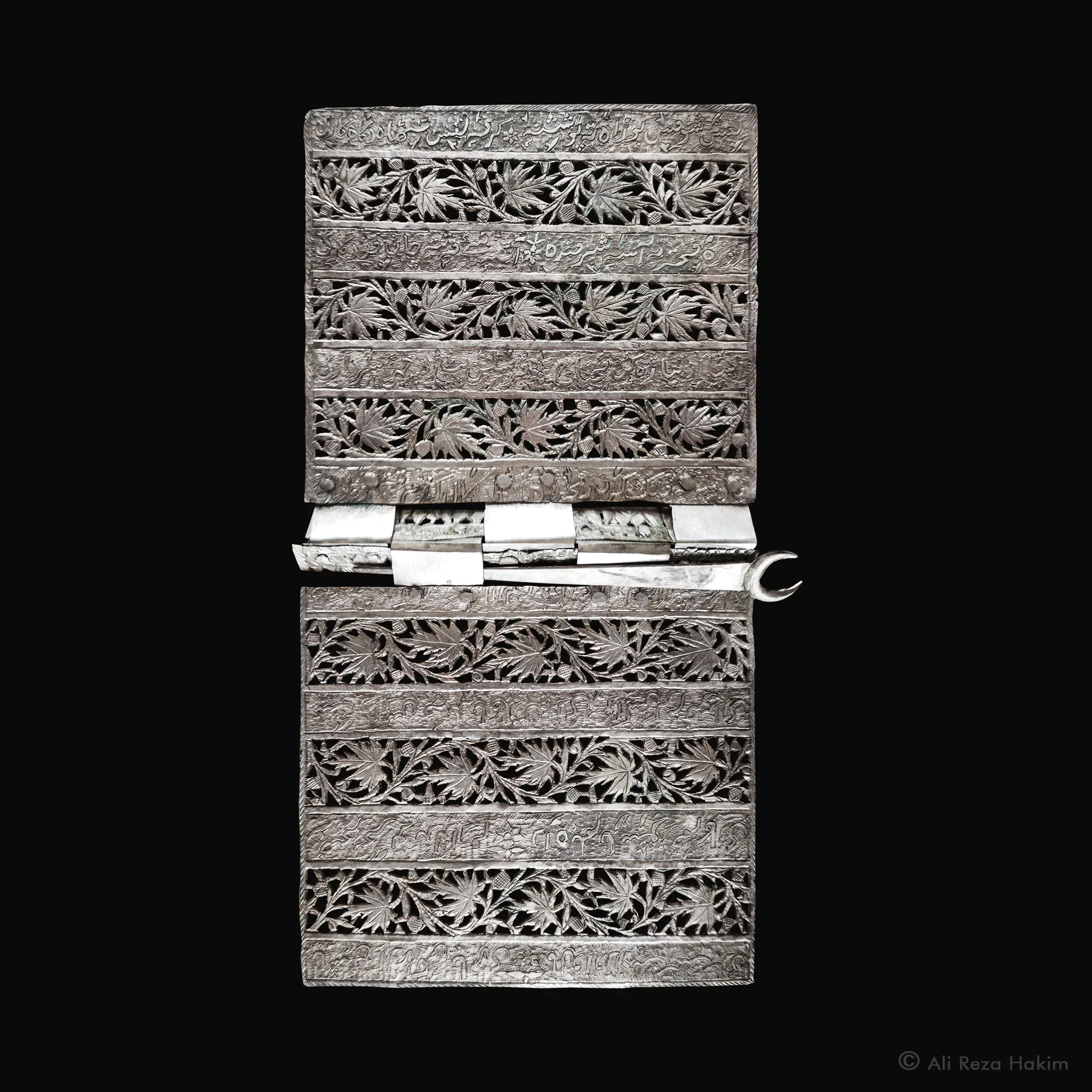
Incense-Stick Stand
(Mushq-e-Tuj stand) مُشکِ تُج سٹینڈ
Late 19th–early 20th century, c. 1880–1920
Origin: Kashmir
Material: Silver
An exceptionally elaborate Kashmiri silver stand for burning incense sticks, distinguished by its tall architectural form and profusion of suspended chains giving it a jewellery-like delicacy. Its elaborate architecture was designed around the ritual act of burning multiple incense sticks rather than simply containing burning incense.
The object is constructed vertically around a slender central stem, rising from a broad, pierced and ornamented base to a domed upper receptacle perforated with numerous small openings that would receive incense sticks, allowing them to stand upright. Unlike an Isband soz, which is principally a burner for loose incense (isband/Syrian rue seeds), this object is specifically configured around individual incense sticks.
The object exemplifies the highly ornamental character of Kashmiri silverwork, in which functional household objects were transformed through intricate chasing, pierced work and flowing vegetal ornament.
Such finely worked silver objects usually formed part of the traditional Kashmiri bridal trousseau, alongside other silver articles such as combs, mirrors, surma daanis, soap cases, sandals and jewellery. Their inclusion in the wedding gifts reflects the importance of silver not only as personal adornment but also as a marker of household status and prosperity.
Private collection: Trām and Beyond